Prison Letter from Kurdish Political Prison Rezgar Beigzadeh Babamiri Describes Torture
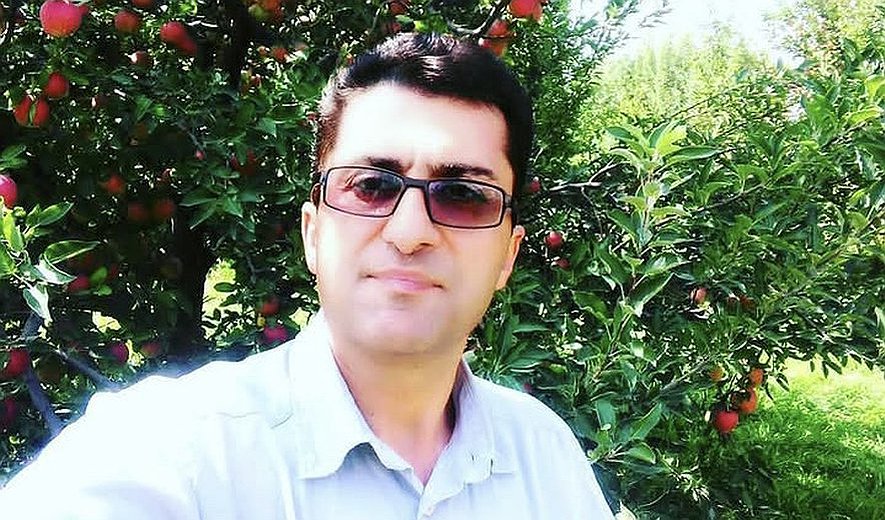
Iran Human Rights (IHRNGO); April 24, 2025: In a letter from Urmia Central Prison, Rezgar Beigzadeh Babamiri, a Kurdish political prisoner arrested in relation to the “Woman, Life, Freedom” protests, describes the torture he endured that included mock executions, an account of his legal complaint for the torture and the impunity enjoyed by the perpetrators.
IHRNGO will be publishing a detailed report on torture within the various law enforcement and security institutions, detention centers, and prisons of the Islamic Republic. This letter reveals only a glimpse of the suffering routinely inflicted on numerous detainees in the Islamic Republic every day.
Full letter:
In writing this letter which tells the story of my 130 days in detention and condition throughout this time, I am trying to reach the civilised world. As I’m under constant surveillance by informants and prison monitoring systems, and naturally experiencing continuous and intense pressure and tension, focusing on writing is not an easy task.
At 5pm on 17 April 2023, I received a phone call from a man named Saeedi, who introduced himself as an agent of the Bukan Intelligence Department. I was summoned to a location near Roj Hall on the outskirts of Bukan. After going to the specified location, I was transferred to the Bukan Intelligence Department by Saeedi and another individual, who I later learned was our case interrogator with the pseudonym Ghorbani. I was detained in a room until around 10pm when an interrogation team of six including Saeedi, Ghorbani, the head of the Bukan Intelligence Department known by the pseudonym Hojati and three other unidentified agents, took turns to inflict the most brutal forms of torture and beatings on me.
In addition to being beaten, I was constantly threatened with death, insulted and humiliated. Hojati, Ghorbani, and Saeedi repeatedly reminded me that I was in a place where, according to them, dozens of "rioters" had previously been tortured to death. They told me I would meet the same fate, and that my body would eventually be dumped like theirs in the Bukan dam lake, sewage canals or mass graves.
They did everything to make me believe that I had reached the end of the line, and that those torturing me were completely immune from legal accountability. They made it clear that my death would carry no consequences for my torturers. Their brutality in torturing me clearly showed that they had no fear of me dying under their torture. During three nights of torture at the Bukan Intelligence Department, I lost consciousness multiple times under thrashings and electric shocks.
After more than 72 hours of continuous torture, I was transferred with several other detainees in a special prisoner transport van, escorted at night by a convoy of vehicles carrying armed plainclothes agents, to the detention centre of the West Azerbaijan province Intelligence Department in Urmia.
From the outset in Urmia, I was subjected to what they themselves called specialised, professional, varied and premeditated torture methods. Various techniques were used on me during interrogations at the Urmia detention centre, a few of which I will briefly recount so the reader can better understand the horrifying atmosphere of these tortures.
1. Water boarding: While handcuffed, shackled and blindfolded, a bag was pulled over my head and I was laid on my back in what resembled a bathroom or toilet. Water was poured over my head and face, which created an overwhelming fear that I was drowning.
2. Mock execution by hanging: Handcuffed, blindfolded and hooded, they would suddenly take me to an unknown room in the middle of the night and force me to stand on a stool with a noose around my neck for hours on end and threaten to secretly and anonymously execute me, attempting to intimidate me as much as possible.
3. Mock execution by firing squad: Handcuffed, shackled and blindfolded, I was continuously insulted and mocked while they pulled the triggers of their weapons, telling me, “We haven’t registered your name anywhere as a prisoner. So when you die under interrogations, it’ll be easy to dump your body like those of the rioters (protesters), in the sewage canals, lake and mass graves.”
4. Electric shock: Blindfolded and handcuffed, I was tied to a chair with a rope, While insulting and invading my personal and family boundaries, the Intelligence Department agents applied electric shocks to my earlobes, testicles, nipples, spine, sides, armpits, thighs, and temples, inflicting unbearable pain to force me to write or say what they wanted on camera.
5. Sleep deprivation: For several consecutive days and nights, Intelligence Department agents kept constantly disturbing me, making noise, shouting insults, entering my cell, beating me and using any means to keep me from sleeping. Their goal was to break my resistance by disturbing my concentration and peace so that I would write their dictated scenarios and repeat it on camera. All the while, my only crime was helping fellow human beings.
From 17 April 2023 until 23 August of that year, this inhumane situation more or less continued. Despite the threats from Intelligence agents, once transferred to Urmia Central Prison, I did everything I could from the very beginning to legally report the torture and other violations committed by the interrogator and investigator in case number 140235920000915742. After months of stalling and delays, I finally succeeded in filing a complaint against the torturing interrogators and the investigator of the Intelligence Department. Case number 140335920002257834 was opened by the Urmia Prosecutor’s Office and after several weeks, was referred to the Military Court of West Azerbaijan Province. However, the deputy prosecutor of the First Branch of the Military Prosecutor's Office of West Azerbaijan Province issued a decision (reference number 14033539000650969) not to pursue charges against the torturing interrogator, under the pretext that a year had passed since the torture occurred. They refused to refer me to the forensic medical examiner and effectively denied any possibility of legally pursuing the human rights violations which granted them immunity from punishment.
It is obvious that torture is an inhumane crime that takes place in secret, away from witnesses and cameras. The only evidence a torture victim can provide to prove the crimes committed against them is the physical marks on their body. In practice, denying access to an independent doctor means granting immunity and support to the torturers and human rights violators. If human rights violations and torture are truly not systematic, then why do competent courts remain silent in the face of victim complaints? How can a security agency summon me, a torture victim, in prison and threaten me with execution for filing a complaint, while no organisation is willing to defend the victim? Why should humanitarian work result in such punishment?
How could the Urmia Revolutionary Court and Judge Reza Najafzadeh, despite the legal briefs submitted by me and other defendants detailing the types of torture suffered by the 14 defendants in this case, respond so coldly in court by simply saying the shameful sentence: “Did you expect them to serve you kebab?” Judicial independence is nothing but a myth in this country. The torturer is fully protected while the victim is placed under threat, pressure, and additional punishments. The goal of security forces is not to maintain public safety, but rather to serve their superiors and exercise blind ethnic and sectarian prejudice. Torture and fabricated cases are standard practices and tools of oppressive forces. I call on the public, NGOs, international bodies, human rights organisations, free press and all free people not to remain silent in the face of these inhumane methods.
During the 130 consecutive days of detention and torture, aside from bruises all over my body, I lost hearing in my left ear due to the blows to my head by the interrogators and couldn’t hear for three months. Later, the ruptured eardrum in my left ear gradually regained some hearing, but during the recovery period, it became severely infected multiple times.
The bruises on my shins are still visible. An ENT specialist can verify the damage that was done to my ear two years ago, but my repeated complaints about the torture have gone unanswered. The Revolutionary Court has ignored my statements and those of my co-defendants, except for Judge Reza Najafzadeh's repeated comment: “Did you expect them to serve you kebab?” Apparently, torture is the fate of anyone who helps others, and in the eyes of this judge, it is considered normal.
Granting power without oversight or accountability, blind sectarian and ethnic biases, repressed personal complexes, material interests, promotions, the quest for more power, bonuses and so on, can turn a law enforcement officer into a horrific and ruthless lawbreaker who tramples all boundaries of humanity just to momentarily satisfy an insatiable thirst for violence and cruelty. Through this, the ruling totalitarian system instils the fear it desires in its citizens.
The civilised world and free people must not remain silent in the face of such large-scale, organised, and at times glorified, violence. Human rights institutions and organisations like the International Criminal Court must not stand idle in the face of these ongoing crimes. Human dignity must not be so easily and continuously violated.
The end
Date: 10 April 2025
Urmia Central Prison – Intake Ward 2
Rezgar Beigzadeh Babamiri
More from @ihrights
IHRNGO is building a strong civil society, through empowerment of the citizens, promoting and defending the human rights.
Latest Cartoon