3 Men’s Fingers Amputated in Urmia; IHRNGO Urges Global Pressure to End Medieval Punishments in Iran
Iran Human Rights (IHRNGO); July 31, 2025: Iran authorities carried out the finger amputation sentences of co-defendants Hadi Rostami, Mehdi Sharifian and Mehdi Shahivand in Urmia Central Prison.
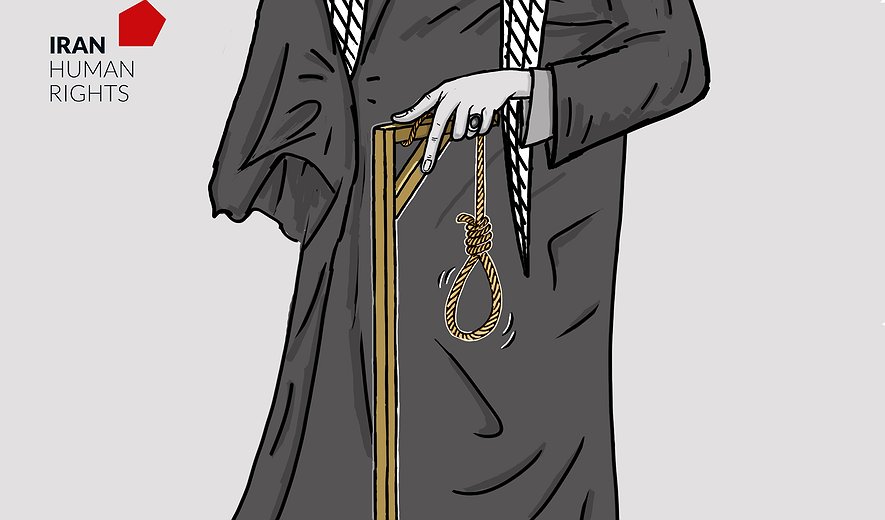
Condemning the cruel and inhumane punishment in the strongest terms, Iran Human Rights calls for international pressure on Iran to abolish such medieval punishments.
IHRNGO Director, Mahmood Amiry-Moghaddam said: “The international community must not tolerate the implementation of medieval and degrading sentences like finger amputations in the 21st century.” He added: “Amputation sentences are carried out with the aim of intimidating the public, targeting the most vulnerable segments of society under theft charges, while officials and those in power who issue such sentences, continue to embezzle and commit mass corruption without any accountability.”
According to information obtained by Iran Human Rights, three men were transferred from their wards in Urmia (Darya) Central Prison at around 10pm on 30 July 2025, and their fingers were amputated around midnight. Their identities have been established as 39-year-old Hadi Rostami, 41-year-old Mehdi Sharifian and 29-year-old Mehdi Shahivand. The three men were arrested between August 2017-November 2019 and charged with theft in a joint case.
Per documents obtained by IHRNGO, the three men were sentenced to “amputation of four fingers from the right hand from the base, so that the thumb remains,” despite their testimony that their confessions had been extracted under torture. Their sentence was subsequently upheld by Branch 13 of the Supreme Court in 2020.
An informed source told IHRNGO that the three men were transferred out of the ward with handcuffs, shackles and hoods around 10pm on 30 July. “The amputations were carried out around midnight with a mechanical guillotine after anaesthetic injections were administered.”
“They were returned to their cells with their bandaged hands a few hours later,” the source added.
In a letter written from prison in March 2025, Hadi Rostami asserted: "I have repeatedly stated that I have no knowledge of the 22 cases of theft attributed to me in the case. But in the detention centre of the Urmia Criminal Investigation Department, I was subjected to severe torture and forced to sign blank papers. Yet, I continued to insist that I had no knowledge of the charges, but my voice wasn’t heard."
IHRNGO had previously warned of the three men’s amputation sentences being carried out and in recent months, called on the international community for urgent action to stop the amputations.
Punishments such as amputation and flogging constitute cruel, inhuman, and degrading treatment and amount to torture under international human rights standards. These practices are strictly prohibited under international law. The Islamic Republic has, in some cases, issued and carried out amputation sentences for crimes as minor as stealing five sheep.
More from @ihrights
IHRNGO is building a strong civil society, through empowerment of the citizens, promoting and defending the human rights.
Latest Cartoon