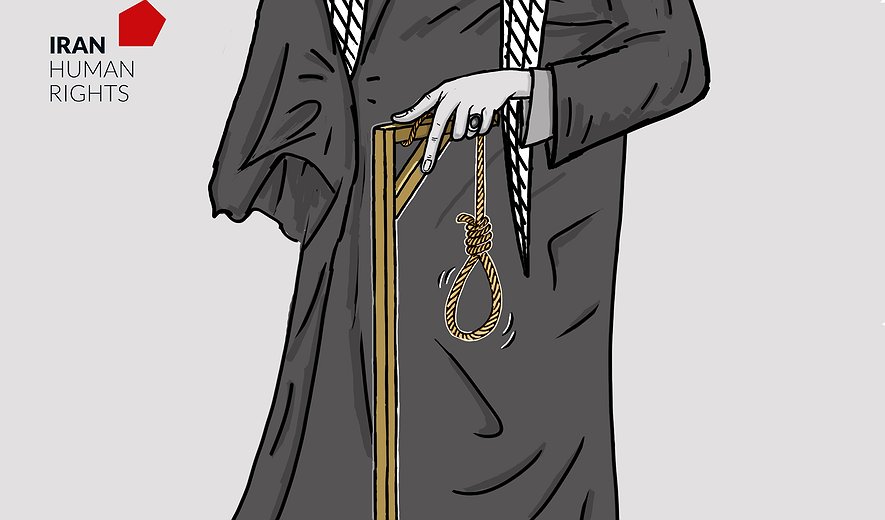
Execution Crisis in Iran: At Least 142 Executions in August 2025
Iran Human Rights (IHRNGO); September 3, 2025: At least 142 people were executed in August 2025, including four women, five Afghan nationals, 11 Baluch, six Kurds and three Ahvazi Arabs. This is a 35% increase compared to the same period in 2024 when 105 executions were recorded.
Stressing that at least 864 people have been executed in Iran in the first eight months of the year, Iran Human Rights once again calls for an international response to the execution crisis in Iran.
IHRNGO Director, Mahmood Amiry-Moghaddam stated: “The Islamic Republic continues its killing spree in complete disregard of repeated calls from the United Nations and international human rights bodies to halt these executions. Governments maintaining diplomatic relations with Iran must urgently place the execution crisis at the top of their agenda. Silence and inaction only embolden the authorities to continue their systematic use of the death penalty as a tool of repression.”
August 2025 Executions at a Glance:
- At least 142 executions were recorded
- Only 5 of the executions (under 4%) were reported by official sources
- 76 people (54%) were on death row for drug-related offences
- 62 people were sentenced to qisas (retribution-in-kind) for murder
- 2 people were executed for the security-related charges of moharebeh (enmity against god) and efsad-fil-arz (corruption on earth), one for espionage for Israel and the other for “extensive activity in the takfiri and terrorist group ISIS”
- 2 people were on death row for rape charges
- 4 women were executed
- 11 Baluch (under 8%), 6 Kurdish and 3 Ahvazi Arabs were amongst those executed
- 5 Afghan nationals were executed
- 2 of the executions were carried out in public spaces
At least 864 executions were recorded in the first eight months of 2025, a 100% increase compared to the same period in 2024 when 432 executions were recorded. Of the 864 executions, 426 were on death row for drug-related offences, 375 were sentenced to qisas for murder, 37 for the security-related charges of efsad-fil-arz, baghy (armed rebellion) and moharebeh, and 26 for rape charges. Of those, only 61 or 7% were announced by official sources.
23 women, 49 Afghan nationals, an Iraqi national and a man only referred to as a “foreign national” were amongst those executed. Nine of those executed for security-related charges were accused of espionage for Israel and two political prisoners were executed for affiliation with banned opposition group People’s Mojahedin Organisation of Iran (PMOI/MEK). Seven of the executions were carried out in public spaces.
On 29 August, the Office of the UN High Commissioner for Human Rights issued a statement about the increasing number of executions in Iran, stating that “the high number of executions indicates a systematic pattern of using death penalty as a tool of State intimidation, with disproportionate targeting of ethnic minorities and migrants.” The UN Human Rights Chief Volker Türk called on Iran “to impose a moratorium on the application of the capital punishment, as a step towards its abolition.”
More from @ihrights
IHRNGO is building a strong civil society, through empowerment of the citizens, promoting and defending the human rights.
Latest Cartoon