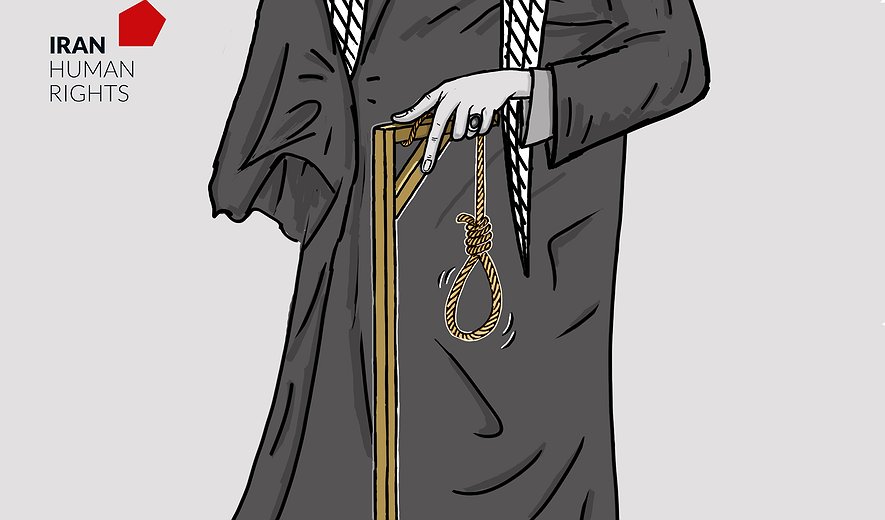
1000 Executions in 2025; Record Number in 30+ Years
Iran Human Rights (IHRNGO); September 23, 2025: At least 1000 people have been executed in Iran in less than nine months of 2025. From 1 January 2025 until today, IHRNGO has verified and recorded 1000 executions. In the last week alone, it has recorded 64 executions, an average of more than nine hangings per day! It is important to note that the figures are an absolute minimum. Due to the lack of transparency and restrictions on reporting, the number is believed to be higher.
Recalling previous warnings about the high and widespread use of the death penalty as a tool of political repression, Iran Human Rights once again calls on the international community to take appropriate action to prevent the continued killing of the population behind bars. Given the scale, systematic nature and political function of the executions to intimidate and create societal fear, the organisation calls on the UN Human Rights Council’s Fact-Finding Mission to investigate them as crimes against humanity.
IHRNGO Director Mahmood Amiry-Moghaddam said: “In recent months the Islamic Republic has begun a mass killing campaign in Iran’s prisons, the dimensions of which, in the absence of serious international reactions, are expanding every day. The widespread, arbitrary executions of prisoners without due process and fair trial rights amount to crimes against humanity and must be placed at the top of the international community’s agenda regarding the Islamic Republic. Any dialogue between countries committed to the foundations of human rights and the Islamic Republic that does not include the execution crisis in Iran is unacceptable.”
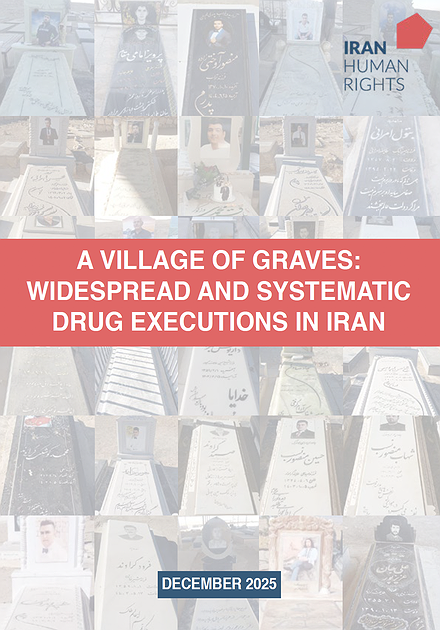
The majority of executions being carried out are for drug-related and other non-lethal offences that do not meet the “most serious crimes” threshold under international human rights law.
Forty-six years after the 1979 Revolution, drug-related executions are still carried out after so-called trials in Revolutionary Courts that lack independence and fair trial guarantees, relying on torture-tainted confessions and denying access to effective legal representation. International courts and UN inquiries have established that executions after sham trials, including of ordinary crime offenders, may amount to crimes against humanity when used systematically as a tool of repression. In light of their scale, secrecy, and political function, Iran’s executions raise serious concerns that they constitute murder, persecution, and other inhumane acts under the Rome Statute.
According to Iran Human Rights data, 50% of all executions were for drug-related offences, 43% for murder, 3% for the security-related charges of baghy (armed rebellion), efsad-fil-arz (corruption on earth) and moharebeh (enmity against god), 3% for rape and 1% for espionage for Israel. Of the 1000 executions, only 11% were announced by official sources. None of the drug-related executions have been officially announced.
More from @ihrights
IHRNGO is building a strong civil society, through empowerment of the citizens, promoting and defending the human rights.
Latest Cartoon