Kurdish “Woman, Life, Freedom” Protester Mehrab Abdollahzadeh at Risk of Execution
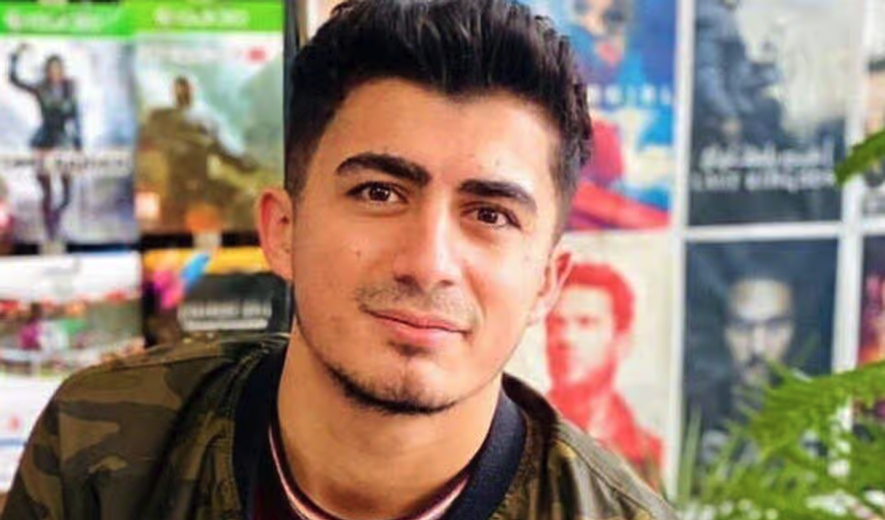
Iran Human Rights (IHRNGO); 21 February 2026: Mehrab Abdollahzadeh, a Kurdish “Woman, Life, Freedom” protester, is at risk of execution after his appeal was rejected by Branch 39 of the Supreme Court.
According to Sidad Shirzad, Mehrab Abollahzadeh’s lawyer, the 29-year-old protester is at serious risk of execution after his Article 474 appeal which was filed on 20 December 2025 was rejected by Branch 39 of the Supreme Court on 27 January 2026. Despite filing another appeal on 16 February, Branch 39 refused to make a stay of execution order, a violation of Article 478 of the Criminal Code of Procedure (CCP).
Mehrab, who worked as a barber prior to his arrest on 22 October 2022 at the height of the “Woman, Life, Freedom” nationwide protests, was subjected to 42 days of physical and psychological torture to extract confessions to injuring an IRGC member on 22 September 2022. According to official reports, the IRGC member died in hospital three days later. In court, Mehrab denied the charges, stating that he had been tortured to confess, “but the judge smirked and said: ‘you’ve all learnt to say you were tortured’ and asserted that ‘none of our experts (interrogators) torture defendants, you’re all lying.’”
Mehrab was sentenced to death on the charge of efsad-fil-arz (corruption on earth) by Branch 1 of the Urmia Revolutionary Court, presided over by Judge Najafzadeh on 19 September 2024.
In a social media post, the lawyer listed the numerous substantive and procedural flaws in the case:
“The case was never adjudicated as a murder case nor examined upon the request of the victim’s next of kin, and yet the death sentence has now been issued not for murder, but for efsad-fil-arz.
While other defendants were under the legal age at the time of the alleged offence and the charge was murder, jurisdiction properly belonged to the Juvenile Criminal Court, yet despite repeated objections regarding jurisdiction and the failure to address the murder charge, none of these objections were ultimately considered.
These objections were raised by Mehrab Abdollahzadeh’s former lawyers and the lawyers of other defendants and are recorded on pages 940, 1008, 1015, 1017, and 1052 of the case file, but nevertheless the case was neither referred to the Juvenile Criminal Court nor even to the Criminal Court One.
Even some judicial authorities involved in the proceedings explicitly expressed this view, including:
- the explicit acknowledgment by the Deputy Prosecutor of the inherent jurisdiction of the Revolutionary Court and Criminal Court One on page 206, and
- the acknowledgment by the Juvenile Criminal Court of its own jurisdiction on page 117.
Additionally:
- The formal notification of charges was conducted in violation of legal requirements and without the presence of a lawyer.
- The deceased’s body was buried without an autopsy and before obtaining a forensic medical opinion.
- After the deceased was hospitalised, a burial permit was issued by the treating physician citing kidney failure as the cause of death.
- No valid legal confession was ever made by Mehrab Abdollahzadeh before an investigator or judge; on the contrary, he explicitly and repeatedly denied striking even a single blow against the deceased.
- In the statements of the deceased Basij commander and his fellow force member, there is neither explicit nor implicit reference to Mehrab.
- In the credible and corroborated statements of other defendants, witnesses, and individuals present at the crime scene, no mention of Mehrab is made.
- The verdict of Branch 9 of the Supreme Court, on line 11 of page 6, explicitly identifies the central role of other defendants in the killing and the infliction of fatal injuries, clearly demonstrating the absence of any role by the defendant.”
The lawyer emphasised that the aforementioned represent only a small portion of the seven-volume case file. Mehrab is held in Urmia (Darya) Central Prison.
More from @ihrights
IHRNGO is building a strong civil society, through empowerment of the citizens, promoting and defending the human rights.
Latest Cartoon