Eyewitness Accounts: Mazandaran and Golestan; Military Weapons Used, Wounded Shot Dead, Teenagers Deployed
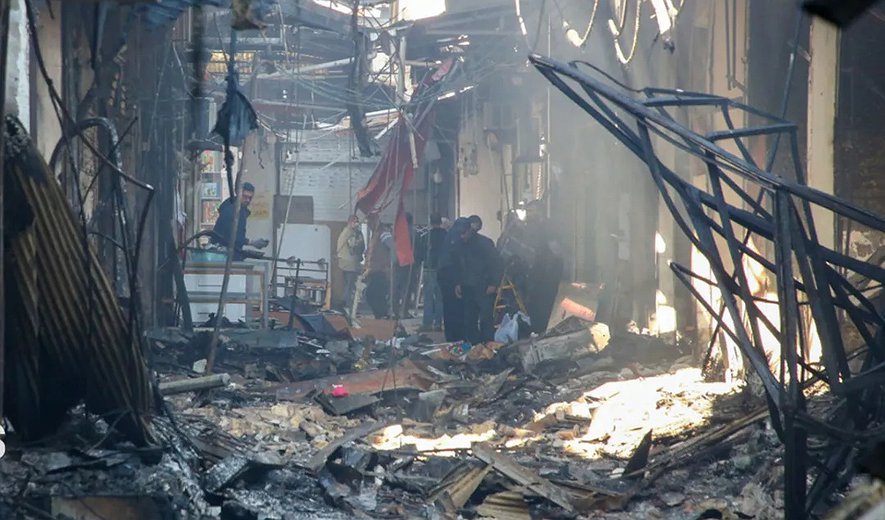
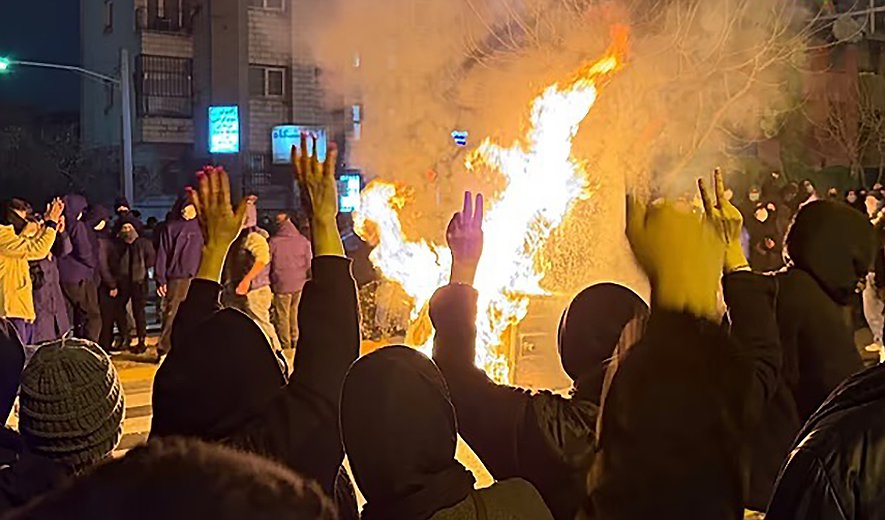
Iran Human Rights (IHRNGO); January 2026: Mazandaran and Golestan provinces were the scene of a severe crackdown on the January 2026 protests. According to eyewitness accounts obtained by IHRNGO, security forces on 8 and 9 January opened fire on protesters with military-grade weapons, shot wounded individuals at close range and subjected demonstrators to severe beatings.
Five eyewitnesses who spoke to IHRNGO reported that hospitals became overwhelmed following the mass transfer of the injured. They described security forces firing directly at protesters’ upper bodies, including deliberately targeting their eyes, the use of teenagers in the suppression operations, and the imposition of a heavy security atmosphere after the protests ended in the two provinces.
Direct Fire With Military Weapons
Kamran, a 39-year-old resident of the Farhang neighbourhood in Sari, told IHRNGO about the events of 8 and 9 January: “On the morning of 8 January, the city was still calm. But from the afternoon onwards, women and men, young and old, were heading towards Sa’at Square. The slogans were not political; they were only chanting ‘Freedom.’ Until around 6 p.m., the security forces were firing tear gas. People would retreat and then return.”
“About an hour later, the situation changed. It was as if an order had been issued. The internet was cut — even text messages and video calls were disrupted. No one could send images. Phone lines had heavy interference.”
According to the eyewitness, security forces then opened direct fire on the crowd with machine guns and live ammunition. “I saw at least five people fall to the ground. One of them had multiple bullet wounds; his eyes were left open. I saw an elderly woman fall and she did not move again. One of the mothers cried out, saying: ‘That was my son — I swear he was unarmed.’”
Referring to the weapons used, he added: “Plainclothes agents had G3 rifles (Heckler & Koch) and handguns, and the Special Units arrived with heavy machine guns. In several places, officers attacked shops and smashed doors and windows. They even fired at homes where residents had given shelter to protesters.”
Fatemeh, 45, witnessed the crackdown on protesters in Behshehr and Qaemshahr. She told Iran Human Rights (IHRNGO): “It was noon on 8 January when people entered Behshehr’s central square. At first, the police only used tear gas. But by around 7 p.m., the internet was cut and there was a complete media blackout. We could not send any photos or videos.”
Now living in Turkey, she added: “Suddenly, there was the sound of gunfire. IRGC and Basij forces (paramilitary branch of IRGC) fired at the crowd with G3 rifles and machine guns. A boy of about 17 fell near the Basij base and did not get up. His mother wailed: ‘What did this child do wrong?’ I can still smell blood and gunpowder.”
She continued: “They surrounded us on Imam Street, and wherever we stepped there were bullets. Young men and women were hit all over their bodies with live ammunition.”
In the city of Babol, the situation on 8 January was initially calm. Mahsa, an eyewitness, said: “Security forces fired tear gas from both sides of the street. Because of the crowding, it was impossible to breathe or see the way, and the streets were effectively blocked. People tried to escape, but all exits were closed. In the same conditions, several motorcyclists in military clothing entered the crowd and fired directly at people. There was extreme fear.”
She also told IHRNGO, citing friends who work in one of Babol’s hospitals: “On the morning of 9 January, the body of a 14-year-old boy was brought to the hospital. He had been shot from behind and a bullet hit his heart.”
Rashid, a resident of Gonbad-e Kavus, told IHRNGO: “On the afternoon of 8 January, the central square of Gonbad-e Kavus was full of people. The internet had been cut since noon. No one knew what was happening. Phone lines were dead and there was no information from outside. From the evening, Special Units and plainclothes officers arrived with G3 rifles, handguns, and machine guns. The smell of tear gas filled the air, and then live ammunition started being fired. I saw at least five people fall immediately. Some had multiple bullet wounds, as if authorities had fired different calibers at the crowd.”
This 52-year-old Baloch eyewitness also described the behavior of security forces in Azadshahr, 18 km from Gonbad-e Kavus: “On Imam Street, people were surrounded and fired upon from multiple directions. Violence escalated. The number of wounded was high. Faces were full of pellets. An injured protester said his eye was destroyed; another shouted for help, but no one dared to approach. Even anyone trying to help a wounded person would have been shot.”
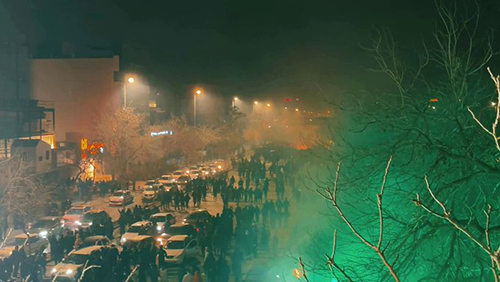
He continued: “On the night of 8 January, a friend told me that officers surrounded two young men — who apparently had stones in their hands — as people were retreating in Gonbad Street. They beat them so severely that blood was everywhere. Then I heard the sound of a coup de grâce, and both fell to the ground. A few minutes later, a van arrived to take the bodies away, but I do not know where.”
Siamak, 29, from Gorgan, told IHRNGO: “On the morning of 8 January, Vali Asr Street and Municipality Square were full of people. Until noon we still had access to the internet, but it was cut off in the afternoon, and even ordinary messages were hard to send. I do not know exactly when the direct shooting started. They were not targeting hands or legs anymore — they aimed directly at the upper body and head. Gunfire and bursts continued until morning.”
Having recently migrated to Turkey, he added: “Plainclothes and Special Units carried handguns, G3 rifles, and some even had heavy machine guns. Wherever they surrounded and captured someone, they stabbed them in the thigh with knives.”
Targeting Eyes and Faces; Deadly Beatings
Eyewitnesses described the number of wounded as countless and the conditions as critical.
Kamran, regarding the wounded in Sari, said: “Ghaarn Street was full of injured people. Faces were full of pellets, eyes were burned. Some of the wounded were taken to Bu Ali Sina Hospital. Some never even made it to the hospital.”
Fatemeh also reported similar cases from Qaemshahr: “The hospital was full of wounded, especially with eye injuries. An elderly man told me, ‘I can no longer see!’ Pellets had hit his eyes. My sister saw the face of a protester who had been beaten so much with boots that all facial features were crushed and unrecognizable. I do not know what weapon they used, but half of a man’s skull had been removed, and the contents of his head were scattered on the ground.”
Mahsa, regarding the wounded in Babol, said: “There were many cases of severe eye injuries, including a person who is personally known to us and lost their sight.”
According to Rashid, in Azadshahr, many protesters’ faces were also full of pellets: “One of the wounded said his eye was destroyed.”
Siamak also witnessed similar cases in Gorgan: “I saw several people with eye injuries. I saw one person whose body was covered with pellet wounds, but they had shot him in the head at close range.”
Hospitals and Transfer of Bodies
Eyewitnesses described the conditions in hospitals as comparable to medical centers in war zones. According to Kamran, an eyewitness from Sari, some of the wounded were in such critical condition that “they never even made it to a hospital.” Fatemeh reported that Razi Hospital in Qaemshahr “was full of wounded.”
Mahsa, citing her doctor friends, said regarding hospitals in Babol: “All non-emergency surgeries and even childbirths had been canceled so that operating rooms could be kept available for protesters’ casualties, as capacity was completely full. This situation was also reported in hospitals in Mahmoudabad and Fereydunkenar.”
She added that on the night of 8 January, at least 15 people were killed in the city, and several others went into a coma. “In one case, a family was told that to receive the body of their daughter, a university student, they had to pay 800 million tomans (around US$5000).”
In the corridors of Payambar-e Azam Hospital in Gonbad-e Kavus, Rashid said, “It was full of injured. Due to the lack of capacity, some were not admitted at all. I saw several mothers wailing over the bodies of their sons.”
Siamak described his observations in Gorgan: “On 9 January, the hospital was full. Many of the wounded were not admitted because they did not want their names recorded. Ordinary patients were not admitted at all. In the yard of the Fifth of Azar Hospital, mothers were crying and wailing beside the bodies of their children.”
Fatemeh also referred to the transfer of bodies, saying: “On the night of 8 January in Behshehr, I saw several bodies placed in a van. By nightfall, no one was being arrested anymore. Whoever they could reach, they would kill.”
Organized Crackdown, Use of Children, and Security Measures After Protests
Security forces not only destroyed vehicles and shops but also deployed teenagers to suppress protesters.
Kamran said: “Many of the destructions and broken car windows in Sari were done by Basij members. Several of them were no older than 15. They were given knives and told to go into the crowd and stab protesters and then disappear. I heard this from the mouth of a very young Basiji who had stabbed one of my friends and was caught by the people. He was so young that people did not allow anyone to beat him. They took his knife and identification and let him go.”
Mahsa said that the “open and instrumental use of children and minors for suppression” was also “visible” in Babol.
Eyewitnesses told IHRNGO that after 9–10 January, a heavy security presence was established. According to Kamran in Sari, night patrols were deployed, checkpoints were set up, and it seemed that the entire city was under surveillance.
Fatemeh, from Behshehr and Qaemshahr, said: “From 10 January onward, the security situation intensified. Patrols were everywhere, along with threats and summons.”
Rashid, from Gonbad-e Kavus, described similar conditions: “From 10 January, anyone outside was arrested. Checkpoints were set up.”
In Gorgan, Siamak witnessed that “from 10 January onward, almost everywhere had checkpoints. The sounds of patrol motorcycles echoed continuously in the streets, and it was truly oppressive.”
There are no precise figures for the number of killed, wounded, or arrested. Previously, a knowledgeable source told IHRNGO that at least 80 protesters were killed on 8 January across several cities in Mazandaran province. According to the source, the bodies of around 50 protesters were seen in hospitals in Sari. About 15 bodies each were reported from Qaemshahr and Zirab.
To protect individuals, all names used in this report are pseudonyms.
More from @ihrights
IHRNGO is building a strong civil society, through empowerment of the citizens, promoting and defending the human rights.
Latest Cartoon