IHRNGO Calls for Urgent Action to Save Lives of Political Prisoners Vahid Baniamerian and Abolhassan Montazer
Iran Human Rights (IHRNGO); 1 April 2026: At least 14 political prisoners including death row political prisoners Vahid Baniamerian and Abolhassan Montazer have been held incommunicado at an undisclosed location since 29 March. Following the secret hangings of their four co-defendants, authorities have refused to disclose the prisoners’ whereabouts or return the bodies of those executed to the families.
IHRNGO calls for urgent international action to save the lives of Vahid Baniamerian and Abolhassan Montazer, and for the remains of the executed political prisoners to be returned to their families.
Mahmood Amiry-Moghaddam, director of the organisation said: “Holding prisoners incommunicado at undisclosed locations, secret executions and the withholding of bodies, amounts to enforced disappearance and constitutes a serious breach of fundamental human rights.” He added: “The war must not overshadow the Islamic Republic’s atrocities against its own people. Vahid Baniamerian and Abolhassan Montazer are at imminent risk of execution. The world must act now to save them.”
According to information obtained by Iran Human Rights, at least 16 political prisoners, among them four death row prisoners, were transferred from Hall 4 of Ghezelhesar Prison to an unknown location on 29 March 2026. This happened when the prisoners attempted to prevent the transfer of political prisoners Mohammad Taghavi Sangdehi and Ali Akbar (Shahrokh) Daneshvarkar, to the gallows. Among them were their co-defendants Pouya Ghobadi, Babak Alipour, Vahid Baniamerian and Abolhassan Montazer.
Islamic Republic authorities announced the executions of the two men the following day. On 31 March, authorities announced the executions of Pouya Ghobadi and Babak Alipour, who like Shahrokh and Mohammad, were also secretly hanged, without prior notification. At the time of writing, authorities have refused to hand over the bodies of the four executed political prisoners to their families.
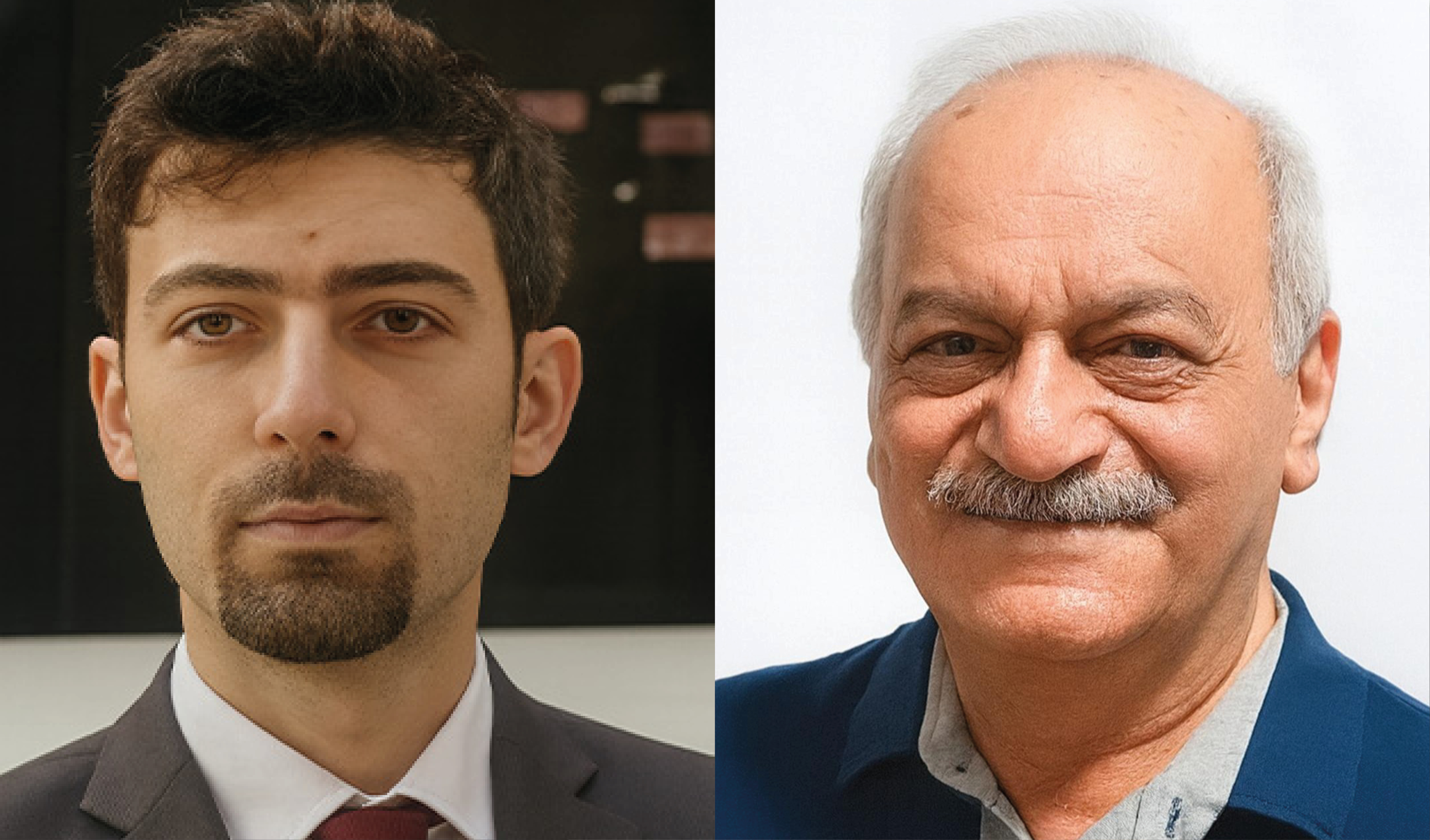
Left to right: Vahid Baniamerian, 34, and Abolhassan Montazer, 68
As the incommunicado detentions continue, the families of the remaining death row political prisoners have been searching for news of their loved ones. An informed source told IHRNGO: “Their families have been trying to find out about their fate since 30 March, when they learned of the transfers and executions. However, they have not been given a clear answer and are extremely worried about them. All they are asking is to see them to make sure they are alive.”
While it is not clear how many other political prisoners were taken from Section 4 due to phones being cut, they include: Saeed Masouri, Ahmadreza Haeri, Afshin Baimani, Hamzeh Savari, Ali Younesi, Sepehr Emam-Jomeh, Reza Mohammad Hosseini, Akbar Bagheri, Ali Moezi, Meysam Dehbanzadeh, Loghman Aminpour, Arsham Rezaei and Hossein Ramezani.
Five of the political prisoners are founders of the “No Death Penalty Tuesdays” movement which began in Ghezelhesar Prison in January 2024 and has since spread to 55 other prisons across the country. For the last 114 weeks, prisoners have been staging weekly mass hunger strikes for the abolition of the death penalty. The six co-defendants in the death penalty case were also members of “No Death Penalty Tuesdays” movement.
Vahid Baniamerian, Abolhassan Montazer, Mohammad Taghavi Sangdehi, Shahrokh Daneshvarkar, Pouya Ghobadi and Babak Alipour were sentenced to death on charges of baghy (armed rebellion) through membership of the People’s Mojahedin Organisation of Iran (PMOI/MEK) in grossly unfair trials. They were subjected to physical and psychological torture, including mock executions, to coerce confessions, held in prolonged solitary confinement and denied access to their lawyers.
According to informed sources, Shahrokh Daneshvarkar had spoken to his family by phone the evening prior to his execution and was unaware of his planned execution. One of the lawyers in the case also confirmed that they had not received prior notification of the executions and were still awaiting the Supreme Court’s verdict at the time they were carried out.
An informed source told IHRNGO: “The Supreme Court had raised objections to the verdict and remitted the case to the lower court to address the flaws in the case.”
More from @ihrights
IHRNGO is building a strong civil society, through empowerment of the citizens, promoting and defending the human rights.
Latest Cartoon
Latest Report