Executions for Drug-related Charges in 2025
This is an excerpt from the 2025 Annual Report on the Death Penalty in Iran.
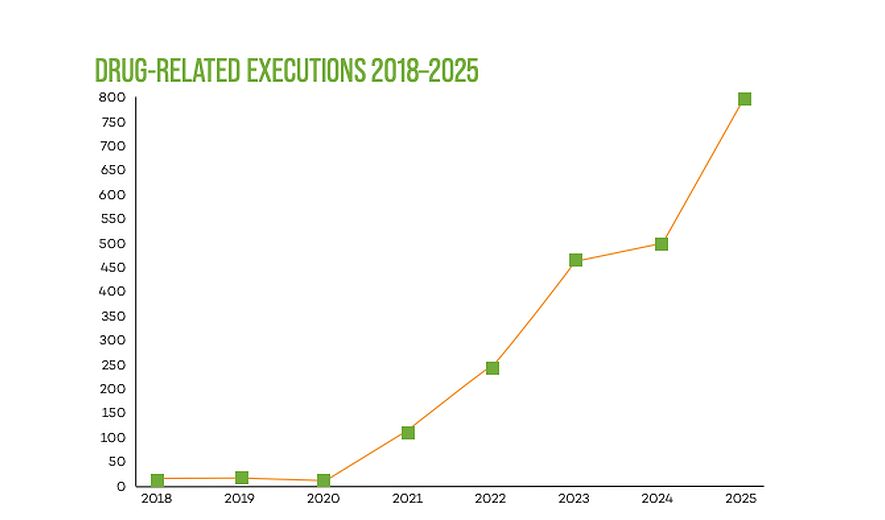
Drug-related executions have been steadily rising since 2021 and accounted for the highest percentage of executions since 2023. Those executed for drug-related charges are from marginalised and deprived communities and amongst the most voiceless victims of the death penalty in Iran. Along with security charges, drug-related charges fall under the jurisdiction of the Revolutionary Courts which systematically deny defendants their rights to due process and a fair trial. According to data gathered by IHRNGO, at least 795 people were executed for drug-related offences in 2025.
Facts and figures about drug-related executions in 2025
- At least 795 people were executed, representing a 58% increase compared to 2024 (503) and about 32 times the number of the drug-related executions recorded in 2020 (25)
- Only 3 (0.4%) of the drug-related executions were announced by official sources
- Executions took place in 27 different provinces
- Baluch minorities, who make up 2-6% of Iran’s population, are overrepresented with 106 executions (13.3%) compared to 17% (85) in 2024, 31% (138) in 2023 and 47% (121) in 2022
- 16 women were amongst those executed
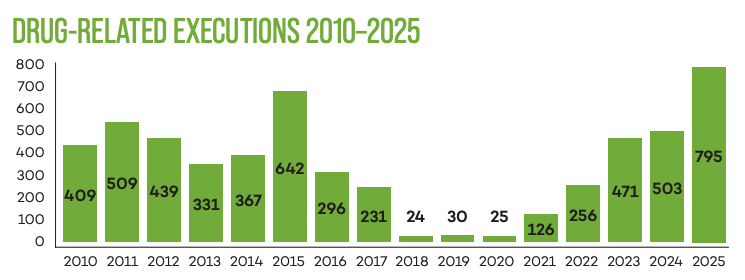
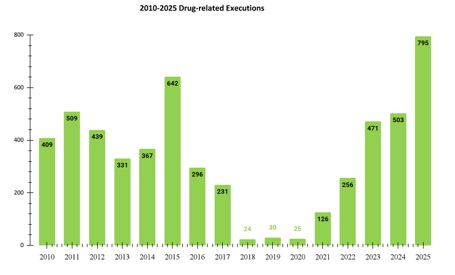
According to IHRNGO reports, an annual average of at least 403 people were executed for drug-related offences between 2010 and 2017. The diagram above shows the reduction in the number of drug-related executions observed in the three years following the Amendment to the Anti-Narcotics Law at the end of 2017. In 2025, drug-related executions were 30 times higher than the annual average of 2018-2020 (the three years following the Amendment) and 25% higher than the annual average of the drug-related executions in the 8 years prior to the Amendment.
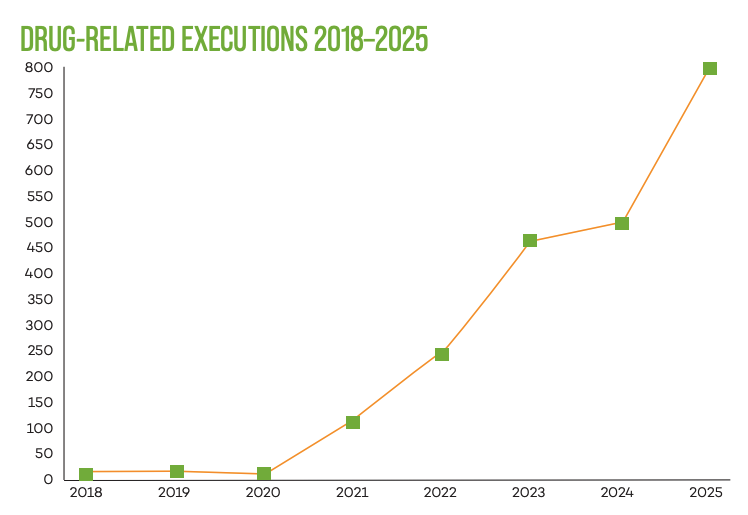
Drug-related executions increased dramatically after 2020. The number of drug-related executions in 2023 and 2024 was respectively 18 and 19 times higher than the annual average recorded between 2018 and 2020. This dramatic rise continued in 2025, with a further increase of 58% compared to 2024.
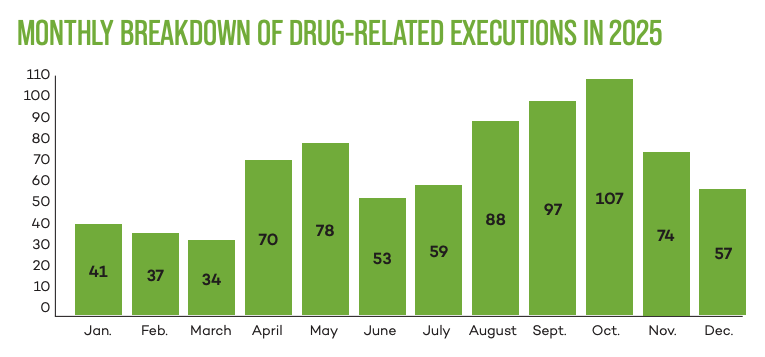
Executions for drug-related offences were carried out every month of the year in 2025. The highest number of drug executions were carried out prior to, and after the Israel-Iran War in June, reaching its peak in October.
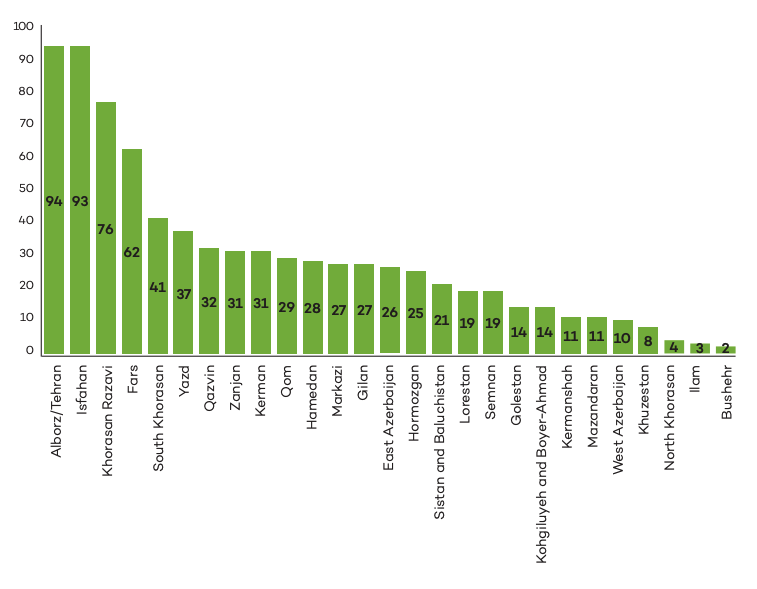
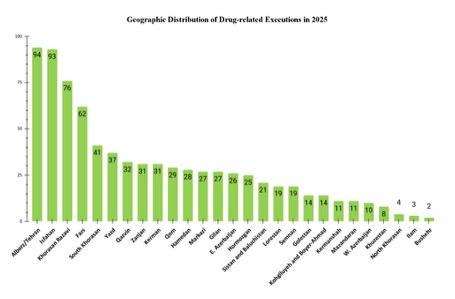
In 2025, drug-related executions were carried out in 27 different provinces, the same number of provinces as 2024. The highest number of drug-related executions were carried out in Alborz/Tehran provinces, followed closely by Isfahan province. The decline in the number of executions in Alborz/Tehran provinces was due to the six-day mass hunger strikes by drug death row defendants in Ghezelhesar Prison in October 2025 which led to the halt in drug-related executions at the prison.
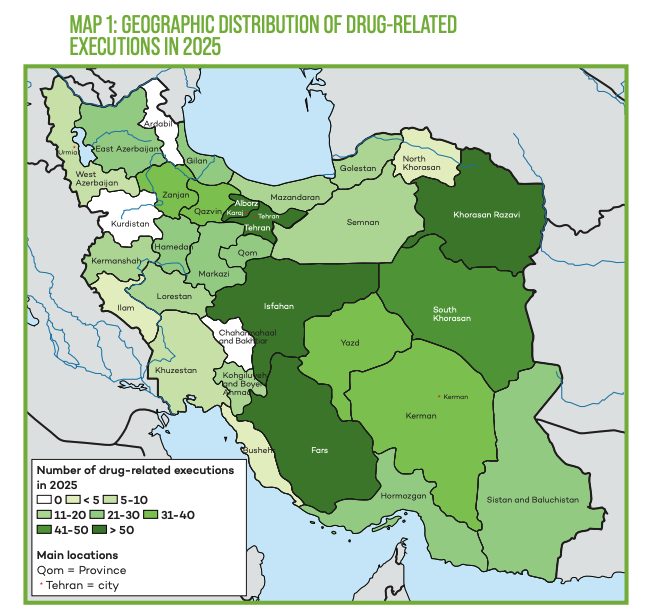
In 2025, IHRNGO recorded drug-related executions in 27 provinces compared to 27 in 2024, 26 in 2023, 21 in 2022, 15 in 2021, 12 in 2019 and 2020 and 7 provinces in 2018.
Executed for drug-related charges
The following are a very small sample of the people executed for drug-related charges in 2025.
Golmohammad Gorgij
Golmohammad Gorgi was a 34-year-old Baluch man arrested for drug-related offences in 2020. He was sentenced to 20 years imprisonment by the Revolutionary Court. However the sentence was later changed to the death penalty for unknown reasons. He was hanged in Gorgan Central Prison on 5 January 2025.[1]
Gholamhossein and Ebrahim Khalilifar
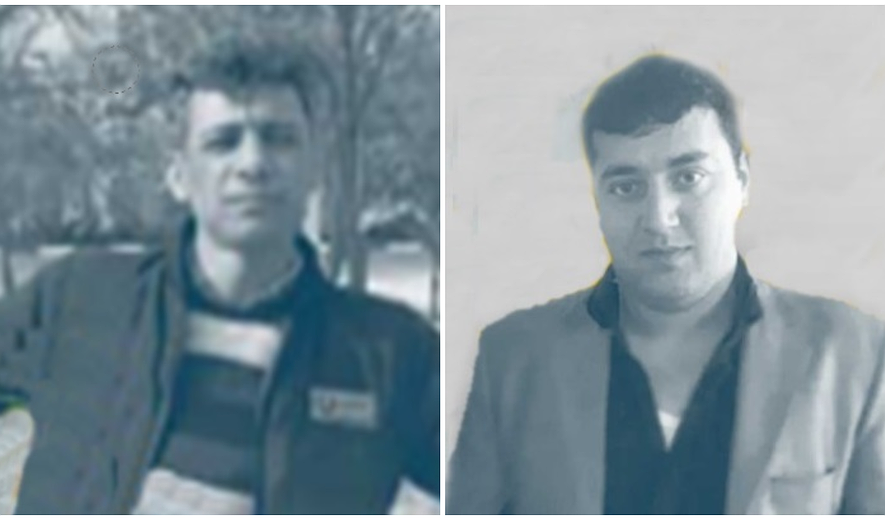
Gholamhossein and Ebrahim Khalilifar were two brothers from the village of Cheshmeh Gol in Torbat Jam who were arrested in a joint case. Despite Ebrahim taking full responsibility for the drugs, both brothers were sentenced to death by the Revolutionary Court. Gholamhossein and Ebrahim were hanged in Mashhad (Vakil Abad) Central Prison on 1st March 2025.[2]
Morteza Kazemzadeh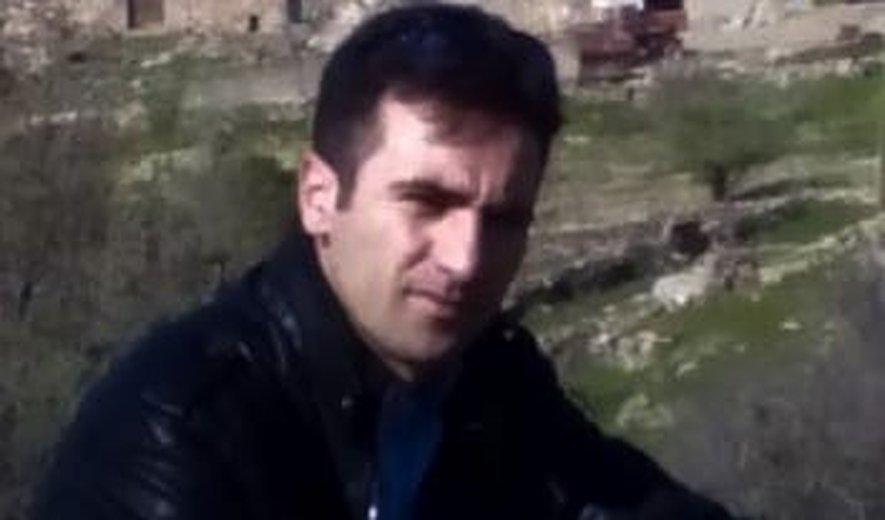
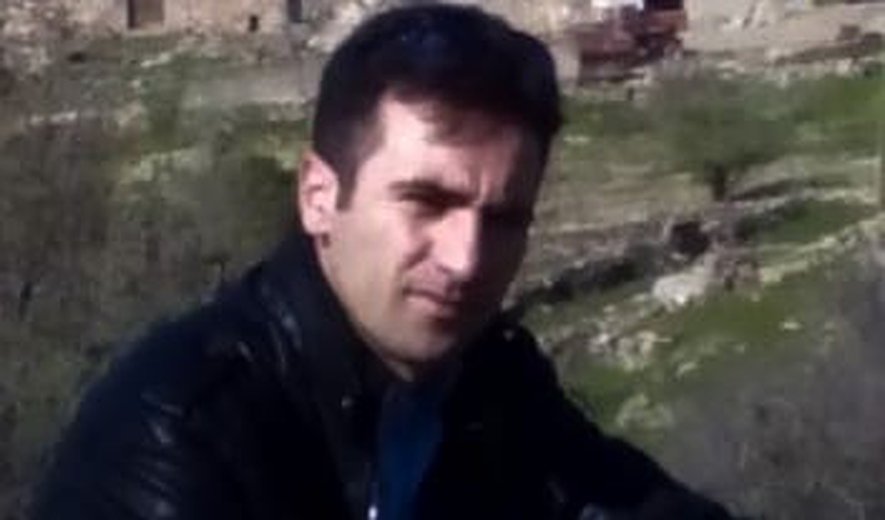 Morteza Kazemzadeh was a 30-year-old father of two who worked as a labourer[1] [2] prior to his arrest. Despite all his efforts, he could not make ends meet with his low wage. He told informed sources: “I worked so I wouldn’t feel ashamed in front of my wife and children, I wanted to earn money so I could buy a bicycle for my son.” The first time Morteza tried to sell drugs as extra income, he was arrested and sentenced to death. Morteza was hanged in Semnan Central Prison on 13 March 2025.[3]
Davoud Lejei
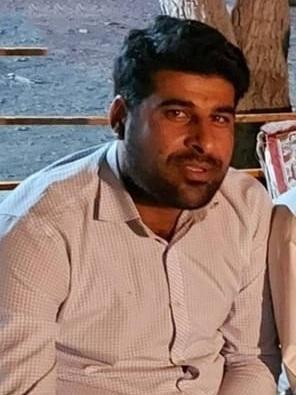 Davoud Lejei was a 37-year-old Baluch man who was arrested in Mashhad on 14 August 2022. He was sentenced to death by the Mashhad Revolutionary Court which was later overturned and referred to a court of equal standing for retrial on 5 January 2025. According to information from the judiciary’s public information system, his retrial was scheduled for 18 November 2025. However, Davoud’s execution was secretly carried out in Mashhad (Vakil Abad) Central Prison on 4 August 2025. His family were only informed after the execution had taken place..[4]
Hassan Amousi
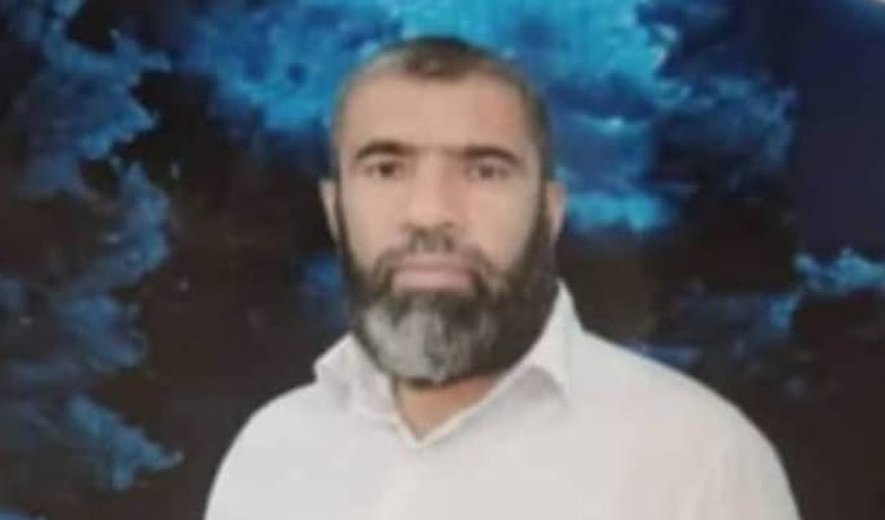 Hassan Amousi (Ejbari) was a 45-year-old Baluch man from Zahedan who lived in Saleh Abad in Torbat Jam. He was arrested in 2022. According to an informed IHRNGO source: “He vehemently denied the charges and insisted they had found no drugs on him.” Yet, he was sentenced to death and secretly hanged in Mashhad (Vakil Abad) Central Prison on 6 August 2025 without his family being notified or a last family visit.[5]
Hassan Ali Zeinzadeh
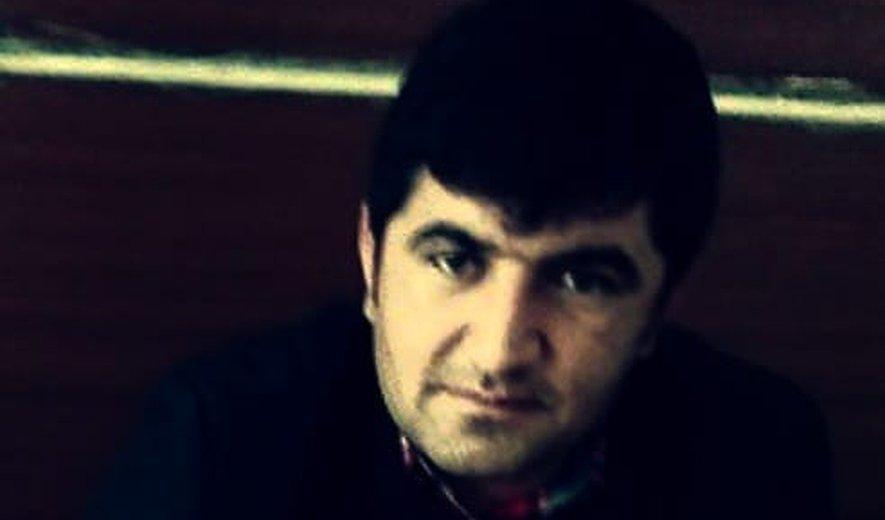
 Hassan Ali Zeinzadeh was a 43-year-old man from Tabriz. He owned a tailoring workshop where drugs were discovered in 2021. Despite vehemently denying possession or any knowledge of the drugs at every stage of the legal proceedings, Hassan was sentenced to death. He was hanged in Tabriz Central Prison on 6 August 2025.[6]
Ahmad Ali Mehripour
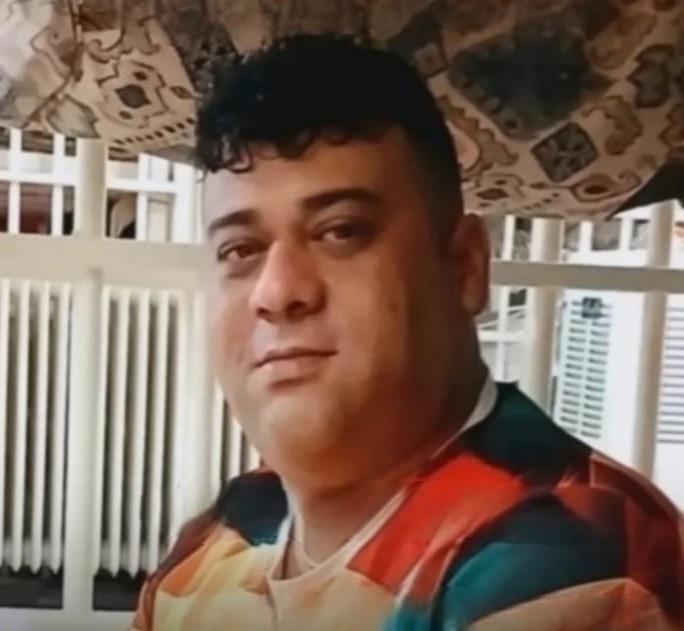
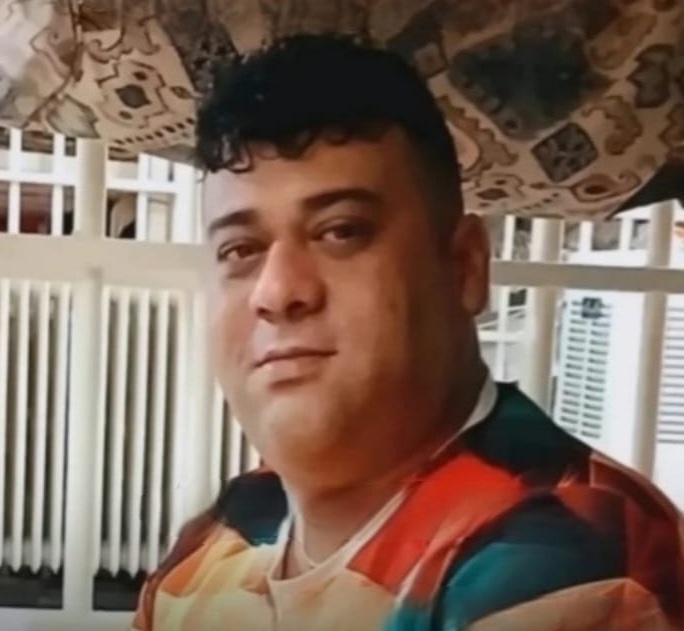 Ahmad Ali Mehripour was a father and labourer[3] [4] who was arrested in 2020. That day, he had driven his sister to Tehran and decided to stay the night at a friend’s house to return home the next day. However, the house was raided in the morning, with all three occupants arrested. According to his family, Ahmad’s name was not on the arrest warrant or any related documents. Despite his family’s efforts to plead his innocence, he was sentenced to death for the drugs found at the house he was staying at. Ahmad Ali was hanged in Ghezelhesar Prison on 30 August 2025.[7]
Dramatic increase in drug-related executions: The UNODC maintains silence on executions and continues its cooperation
The last Amendment to Iran’s Anti-Narcotics Law came into force on 14 November 2017, leading to a significant drop in the number of drug-related executions, from an annual average of 403 to an average of 26 executions in the proceeding three years. The number of commuted death sentences as a result of this Amendment could be as high as 6,000, according to Islamic Republic lawmaker Hassan Norouzi.[8] However, this trend was reversed in 2021, and the number of drug-related executions have dramatically increased since. The number of drug-related executions in 2025 was about 32 times higher than the number in 2020.
Iranian authorities introduced the 2017 Amendment to the Anti-Narcotics Law mainly due to international pressure. Crucially, European states funding UNODC projects to combat illegal drugs in Iran were unwilling to fund any further projects due to the high number of drug-related executions.[9]
In the last four editions of the Annual Report on the Death Penalty in Iran, IHRNGO and ECPM have expressed grave concern about the alarming rise in the number of drug-related executions and called on the UNODC to react.[10] The UNODC’s silence on the execution of hundreds annually, in addition to its support of Iran’s law enforcement and providing political legitimacy for executions, makes it complicit in the executions. Yet, the UNODC continues its cooperation with the Islamic Republic without regard to the high number of drug-related executions.
In a meeting in Iran on 17 February 2025, the UNODC Country Representative described “the ongoing cooperation and joint initiatives between the UNODC and Drug Control Headquarters as highly positive and commendable. He affirmed his and the UNODC’s commitment to expanding collaboration and securing additional financial resources to support Iran’s programs.”[11]
According to the Tehran Times’ report of the meeting, “[t]o enhance the operational capacity of the Iranian Anti-Narcotics Police, the UNODC provided four drug trace detector devices to the Customs Organization and Anti-Narcotics Police of Iran under the Japanese government’s funding on February 5. Through the generous donation of the Government of Japan, the UNODC Iran in 2023 and 2024, procured key devices including drug identification devices, drug-detecting dogs, Canine Trailers and other accessories for drug-detecting dog centers.”[12]
In line with the UN Human Rights Due Diligence Policy (HRDDP, 2015)[13] and the UN Safeguards guaranteeing protection of the rights of those facing the death penalty (ECOSOC resolution 1984/50),[14] the UN must ensure that its support to national law enforcement, prosecutorial, judicial or correctional authorities in Iran’s drug-control sector does not contribute to or facilitate executions carried out in breach of international human rights standards. Consistent with the purposes of the UN Charter, which include the promotion of respect for human rights, UNODC is required to carry out thorough risk assessments before providing assistance, focusing on the possibility that such support may be used in prosecutions or convictions leading to death sentences imposed without full observance of the required procedural safeguards. Where such risks exist, the UN should condition its engagement on the strict application of those safeguards, including fair trial guarantees, protection against coerced confessions, access to counsel, the right to appeal and the requirement of proportionality, and should prioritise assistance aimed at prevention, treatment, judicial reform and non-capital alternatives. Under the HRDDP, the UNODC must also monitor the conduct of supported partners and be prepared to suspend or withdraw assistance where grave violations persist despite mitigation efforts. These measures are essential to uphold the Organisation’s Charter-based duty to respect and promote human rights, including the right to life and fair trial guarantees under the ICCPR, and to ensure that UN activities do not directly or indirectly contribute to the application of the death penalty contrary to international law.
Drug executions: Costless victims of the death penalty for political repression
Iranian authorities use the death penalty as a political tool of oppression and repression. Analysis by IHRNGO demonstrates a meaningful correlation between the number of executions and political events.[15] Following the outbreak of the “Woman, Life, Freedom” nationwide protests, officials publicly threatened protesters with the death penalty. However, the strong international backlash made the execution of protesters politically costly for the Islamic Republic. Since then, the number of drug-related executions have increased dramatically, despite the Islamic Republic’s own repeated admission that the death penalty does not deter drug crimes.[16]
Thus, the authorities’ need to instil fear in society in order to prevent further protests is the most likely reason for the sharp increase in the number of drug-related executions. Drug offenders are predominantly from the most marginalised groups in society, and ethnic minorities – the Baluch in particular – are grossly overrepresented among those executed. This, together with the international community’s silence, and in part UNODC’s continued cooperation, makes the political cost of their execution very low. All drug-related offences are processed by the Revolutionary Courts. Reports collected by IHRNGO demonstrate that those arrested for drug-related offences are systematically subjected to torture in the weeks following their arrest. They often do not have access to a lawyer while in detention, and by the time a lawyer gains access to their case, they have already “confessed” to the crime.[17] Revolutionary Court trials are also typically very short, with lawyers often not even given a chance to present a defence for their clients. As such, the authorities can accuse anyone of drug-related offences and sentence them to death anytime they desire to do so.
In a report titled “A Village of Graves: Widespread and Systematic Drug Executions in Iran,” IHRNGO documented the case of Sartarhan Chah Kheyr village where 70 drug-related executions and 100 death row cases have been reported. Located in Lorestan province, the village has a population of 388, according to the 2016 census. In the village cemetery, IHRNGO verified the graves of 27 men and a woman who were executed for drug-related charges and two death row prisoners who died due to the denial of medical treatment, one after a heart attack and the other by suicide upon being informed of their impending executions.[18]
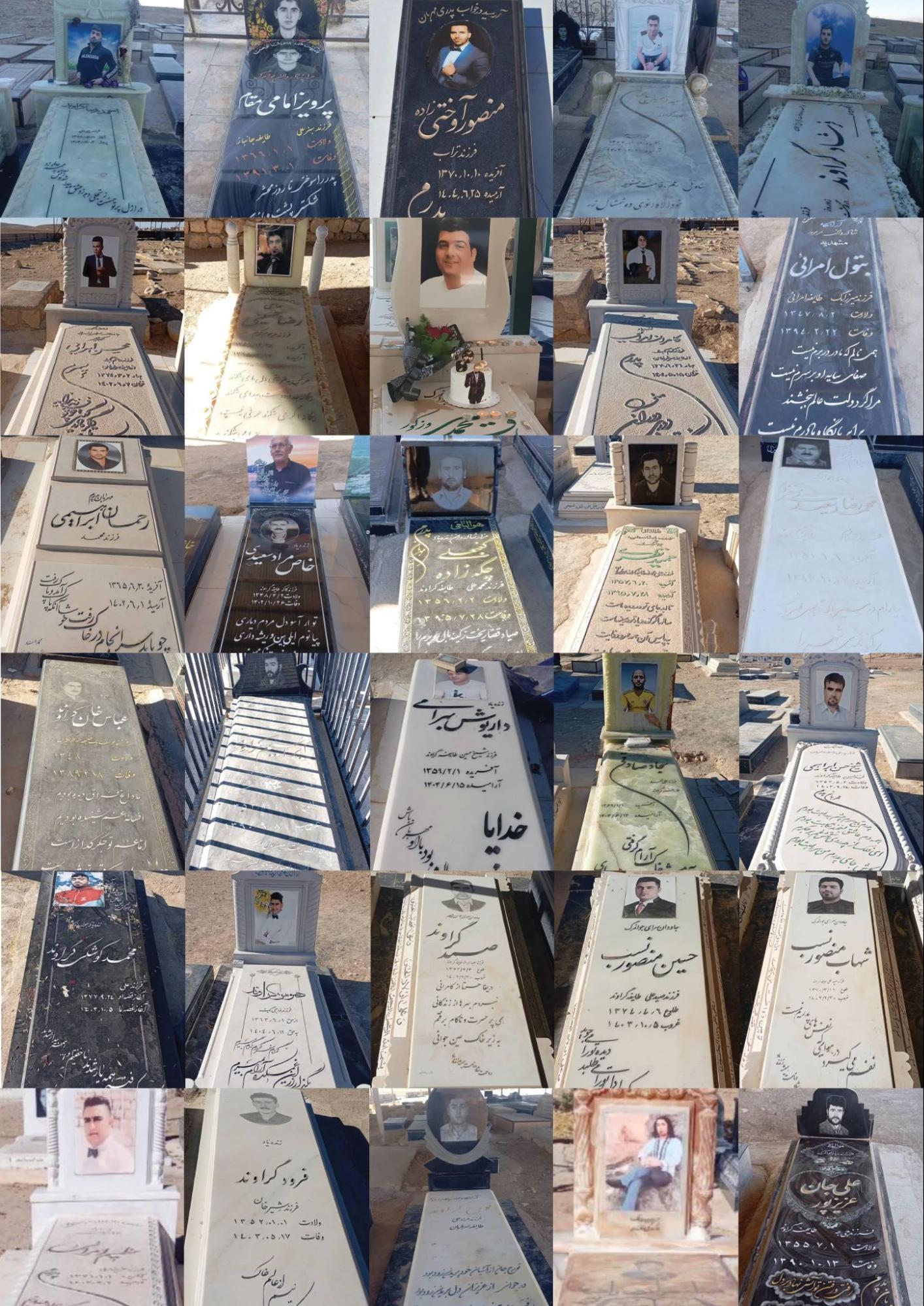
Gravestones of people executed for drug-related offences in Sartarhan Chah Kheyr village in Lorestan province.
[1] https://iranhr.net/en/articles/7327/
[2] https://iranhr.net/en/articles/7392/
[3] https://iranhr.net/en/articles/7429/
[4] https://iranhr.net/en/articles/7869/
[5] https://iranhr.net/en/articles/7856/
[6] https://iranhr.net/en/articles/7862/
[7] https://iranhr.net/en/articles/7932/
[8] https://www.rokna.net/بخش-اخبار-سیاسی-74/957563-نوروزی-رئیسی-با-محافظ-به-پرند-رفت-نوری-قزلجه-ازاعدام-هزار-جوان-به-جرم-مواد-مخدر-جلوگیری-کردیم
[9] RTE, Government ceased anti-drug programme funding over Iran death penalty fears, 8 November 2013, https://www.rte.ie/news/2013/1108/485366-ireland-anti-drug-iran/
[10] See, for example, IHRNGO and ECPM, Annual Report on the Death Penalty in Iran, 2022, https://iranhr.net/media/files/Rapport_iran_2022_PirQr2V.pdf
[11] UNODC Country Representative Met WIth The Secretary General of Drug Control Headquarters: https://www.unodc.org/islamicrepublicofiran/en/unodc-country-representative-met-with-the-secretary-general-of-drug-control-headquarters.html
[12] UNODC fully prepared to continue close cooperation with Iran: https://www.tehrantimes.com/news/510161/UNODC-fully-prepared-to-continue-close-cooperation-with-Iran
[13] https://unsdg.un.org/sites/default/files/Inter-Agency-HRDDP-Guidance-Note-2015.pdf
[14]https://www.unodc.org/pdf/criminal_justice/Safeguards_Guaranteeing_Protection_of_the_Rights_of_those_Facing_the_Death_Penalty.pdf
[15] IHRNGO, Relationship between political events and the death penalty trends in Iran, 11 July 2013, https://iranhr.net/en/articles/982/
[16] IHRNGO, Mohammad Javad Larijani: Death Penalty Does Not Deter Drug Crimes, 31 December 2015, https://iranhr.net/en/articles/2408/
[17] See also, Human Rights Watch, Iran: Bid to End Drug-Offense Executions, 16 December 2015, https://www.hrw.org/news/2015/12/16/iran-bid-end-drug-offence-executions
More from @ihrights
IHRNGO is building a strong civil society, through empowerment of the citizens, promoting and defending the human rights.
Latest Cartoon
Latest Report