Truth and accountability in Transitional Justice
Truth and accountability in Transitional Justice
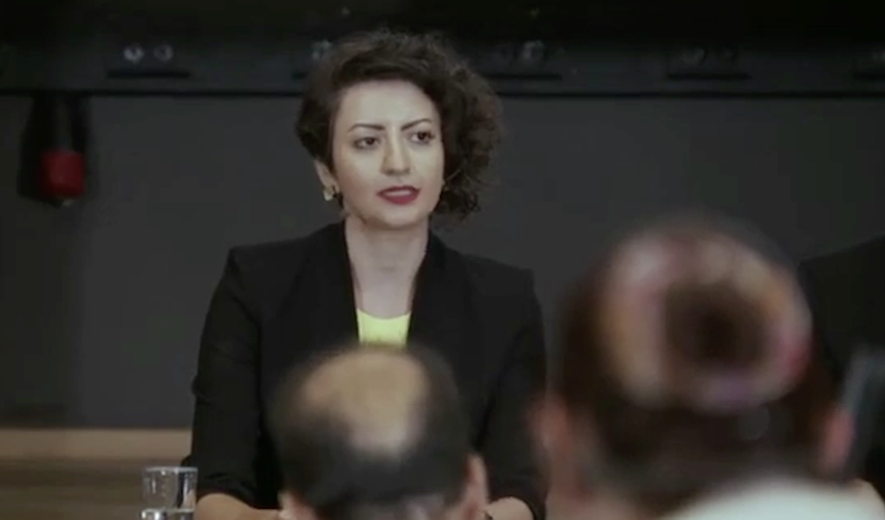
At the "Justice in Transition: Challenges and Solutions" conference, hosted by Iran Human Rights at the University of Oslo in September 2023, Raha Bahreini, a human-rights lawyer, underlined the decisive role of independent prosecutors in confronting past crimes.
Speaking in a personal capacity rather than on behalf of Amnesty International, she argued that prosecutorial courage can determine the success or failure of transitional justice.
Bahreini began by defining the term: a set of mechanisms designed for countries emerging from dictatorship or war, intended not only to prosecute perpetrators but also to record victims’ stories, issue public apologies, create memorials, reform institutions and open archives. No single tool is enough, she said; truth commissions and criminal trials must work in tandem. Commissions can uncover patterns of abuse and set them in a historical context, while courts must establish guilt and ensure accountability.
Experience from Argentina and Chile in the 1980s and 1990s, she recalled, showed that commissions were initially used as substitutes for prosecutions. International tribunals and UN committees later insisted that serious crimes such as torture and crimes against humanity required criminal accountability. Those implicated, she said firmly, must be investigated and punished.
For commissions to be effective, Bahreini stressed, they must be established by statute and armed with real powers: to summon witnesses, access documents and inspect sites of atrocity. Bodies created by executive decree alone often lack resources and legal force. Equally essential, she added, is wide consultation with victims and civil society. In Liberia, for instance, scores of organisations contributed to drafting the law that founded its commission.
The scale of such work is immense. In Peru more than 800 staff were employed across four regional offices; in South Africa over 20,000 testimonies were taken; in Tunisia the total exceeded 60,000. For Iran, with decades of repression and hundreds of thousands of victims, the figure could run into the millions. Only new technology, including artificial intelligence, could manage such a volume.
Commissions and courts, she explained, need not operate sequentially. Although commissions cannot themselves pronounce guilt, they can collect and forward evidence to prosecutors, whose investigations may proceed in parallel.
A large part of Bahreini’s address focused on prosecutorial independence. Transitional justice, she argued, requires a special prosecution service, insulated from political interference and safeguarded by law. In some countries, she noted, tampering with prosecutors carries heavy penalties. Appointments, she said, should not rest solely with the head of government but with an independent panel vetting candidates’ integrity. “Prosecutors are on the front line of justice,” she declared. “Their decisions can shape the course of an entire transition.”
She closed by insisting that truth commissions and criminal trials must be complementary, resourced adequately and, above all, anchored in the participation of victims themselves. Only then, she said, could transitional justice in Iran hope to succeed.
Translated from Farsi via machine translation and lightly edited for clarity.
More from @ihrights
IHRNGO is building a strong civil society, through empowerment of the citizens, promoting and defending the human rights.
Latest Cartoon
Latest Report