Amiry-Moghaddam: Iranians Are Ready for Fundamental Change
Amiry-Moghaddam: Iranians Are Ready for Fundamental Change
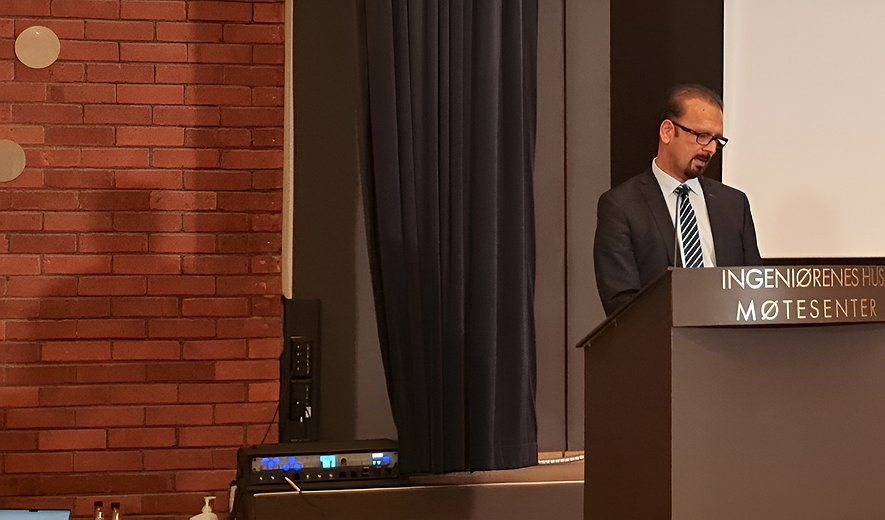
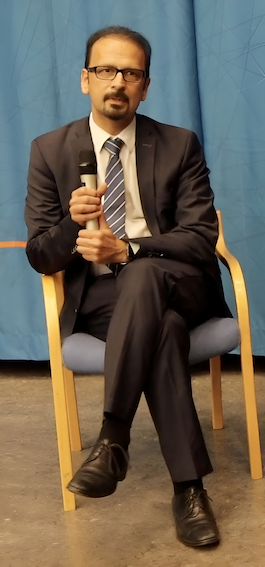
Mahmood Amiry-Moghaddam, professor of medicine and director of the Norway-based NGO Iran Human Rights, described the Islamic Republic as “unstable, corrupt, and dysfunctional,” insisting that Iranians are prepared to bear the cost of fundamental change. The pace of such change, he argued, depends on the emergence of an effective alternative. “An opposition with genuine social legitimacy, executive capacity, and a clear programme for transition could accelerate this process,” he told an audience.
Opening the conference on “Governing Transition and Safeguarding Citizens’ Rights in Iran” at the University of Oslo on 31 August 2024, Amiry-Moghaddam described the “Woman, Life, Freedom” movement as the largest human-rights mobilisation in Iran’s modern history—and perhaps in the Middle East. He noted that, despite brutal repression, Iranians continue to demand their basic rights.
For decades, he noted, Iranian citizens have been treated as second-class because of their gender, ethnicity, religion, or simply because they rejected the ruling ideology. Citing a UN fact-finding mission that described the regime’s crackdown as crimes against humanity, he stressed that repression had targeted not only demonstrators but also their families.
He recalled the case of Mashaallah Karami, father of executed protester Mohammad Mehdi Karami, who was sentenced to eight years in prison merely for seeking justice for his son. Still, bereaved families refuse to relent in their pursuit of accountability.
Amiry-Moghaddam described the death penalty as the regime’s “chief weapon of terror.” The sentencing of Kurdish women activists Pakhshan Azizi and Sharifeh Mohammadi to death, he said, was a clear attempt to crush the “Woman, Life, Freedom” movement.
Executions, he reported, have doubled in the two years since the protests, with the state averaging more than two hangings a day—mostly for non-political offences such as drug-related crimes. These disproportionately affect the most vulnerable groups, particularly Baluch and Kurdish minorities. Yet, in parallel, the anti-death penalty movement has been gaining ground both inside and outside Iran.
 He highlighted the protest campaign launched seven months ago by political prisoners in Ghezel Hesar prison—“Tuesdays of Protest: No to Executions”—which has since spread to other prisons across Iran and attracted support from both Iranian and international human-rights organisations.
Despite intimidation, the return of morality-police (Hijab controllers) patrols, and harsher laws, Iranian women, he said, continue civil resistance against compulsory veiling and discriminatory legislation. The push to classify gender apartheid as an international crime—an initiative pioneered by women in Iran and Afghanistan—is attracting growing global support.
The professor also pointed to the intensifying persecution of religious minorities, especially Bahá’ís, noting that public awareness and protests against such discrimination are on the rise. The widespread boycott of state-run elections, he argued, shows that society has moved beyond all factions of the Islamic Republic: “Official propaganda no longer deceives the public.”
“No reformist can restore the regime’s lost legitimacy,” he declared. Only dismantling the office of the Supreme Leader and its institutions—including the Revolutionary Guards—while establishing a genuinely elected parliament and an independent judiciary, could open the way to meaningful reform.
Iranians, he insisted, have repeatedly shown they are ready to pay the price for change. But the speed and feasibility of transition depend on the formation of a capable opposition—one with social popularity, operational strength, and a clear roadmap for the post-Islamic Republic period. Such an alternative, he added, can only emerge from broad-based coalitions that reflect the country’s social diversity.
Political groups must engage in dialogue on practical solutions for the challenges of transition, he said, warning that partisan rivalries should not obstruct agreement on essential minimums. These, he listed, include: equal rights for all citizens regardless of gender, ethnicity, religion, or political belief; freedom of speech, media, and association; free elections; transitional justice; abolition of the death penalty; and concrete policies to tackle the water crisis and safeguard the environment through sustainable development.
Concluding, Amiry-Moghaddam said the purpose of his organisation’s annual conferences is to help nurture such a discourse inside Iran, expressing hope that activists and political groups alike will join in advancing this project.
More from @ihrights
IHRNGO is building a strong civil society, through empowerment of the citizens, promoting and defending the human rights.
Latest Cartoon
Latest Report