Life Matters More Than Land
Life Matters More Than Land
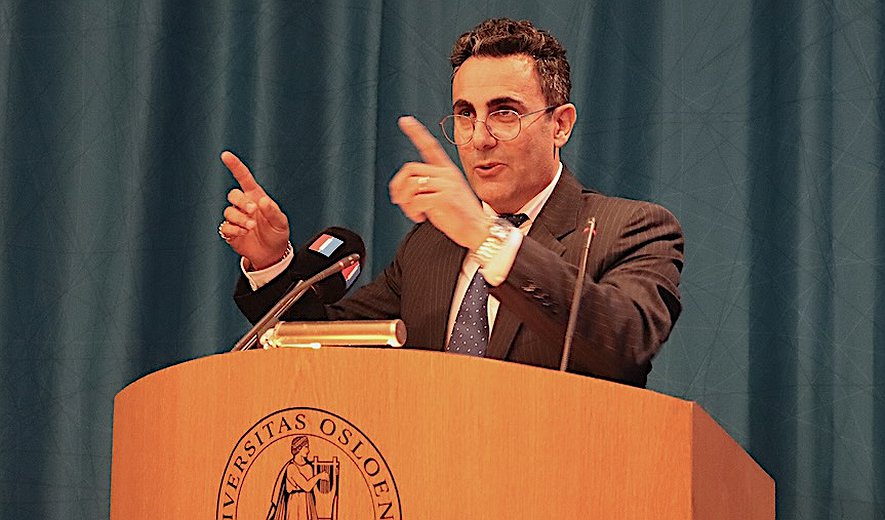
Ecologist and environmental scientist Mansour Sohrabi stressed the primacy of human life over territorial concerns, warning that dismissive attitudes towards local identities and continued discriminatory policies not only block the path to democracy but also endanger Iran’s very future.
Speaking at the conference “Transition and Safeguarding Citizens’ Rights in Iran” in Oslo on 31 August 2024, Sohrabi argued that Iran’s uneven development since the mid-20th century lies at the root of many present crises. “Since 1948 the foundations of development were laid crooked, concentrated in a handful of central cities. As a result, vast regions of the country were excluded—and today all Iranians suffer the consequences.”
He painted a stark picture: soil erosion, land subsidence and deforestation have passed critical thresholds, leaving many areas uninhabitable. Official data, he noted, show average land subsidence in Iran at 15 centimetres a year—when in Europe even four millimetres is considered a crisis. Iran now ranks first globally in soil erosion: forming just one centimetre of fertile topsoil takes 700 to 1,000 years, yet in some regions 50 tonnes per hectare are lost annually. Half of Iran’s forests, he added, are already gone.
Ill-conceived policies, he said, have aggravated these crises. Heavy industries were located in arid regions rather than water-rich provinces: “Isfahan, artificially burdened with population and industry, now suffers widespread land subsidence. Why should steel and smelting plants be in the desert, rather than in Kurdistan, Baluchistan or Khuzestan?”
For Sohrabi, the roots of ecological collapse lie in structural discrimination that has blocked balanced development and deepened the marginalisation of Iran’s diverse peoples. “Dismissing and belittling local identities solves nothing,” he argued. “We are dealing with nations without states who regard themselves as nations, and their collective rights must be recognised in any future framework.”
Drawing comparisons with past empires, including the Ottomans, he warned of the real risk of territorial disintegration if current policies persist. The only way to preserve Iran, he said, is to embrace sustainable development built on participatory democracy. Parliamentary majoritarianism cannot secure the collective rights of minorities, he insisted: decision-making must be devolved to local and regional levels.
The former lecturer at Islamic Azad University in Mahabad proposed empowering local governments, regional parliaments and village councils, with their representatives participating in the central state. “Tehran should not decide for Kurdistan,” he said, “just as Kurdistan should not decide for Baluchistan. People in each region must legislate for themselves through their local assemblies.”
Sohrabi highlighted that democracy is a gradual process. The “Woman, Life, Freedom” movement, he said, showed that societies shaped by long traditions of authoritarianism cannot become democratic overnight. “Democracy begins with a change of attitude. Only by abandoning disdain for ethnic and local identities can we create the possibility of living together.”
He closed by stressing that Iran remains rich in resources and opportunities. But its future, he argued, depends on moving towards a fully decentralised system—one rooted in sustainable development, inclusivity and respect for social diversity.
Translated from Farsi via machine translation and lightly edited for clarity.
More from @ihrights
IHRNGO is building a strong civil society, through empowerment of the citizens, promoting and defending the human rights.
Latest Cartoon
Latest Report