Transitional Justice in Iran: Beyond Revenge
Transitional justice in Iran: beyond revenge
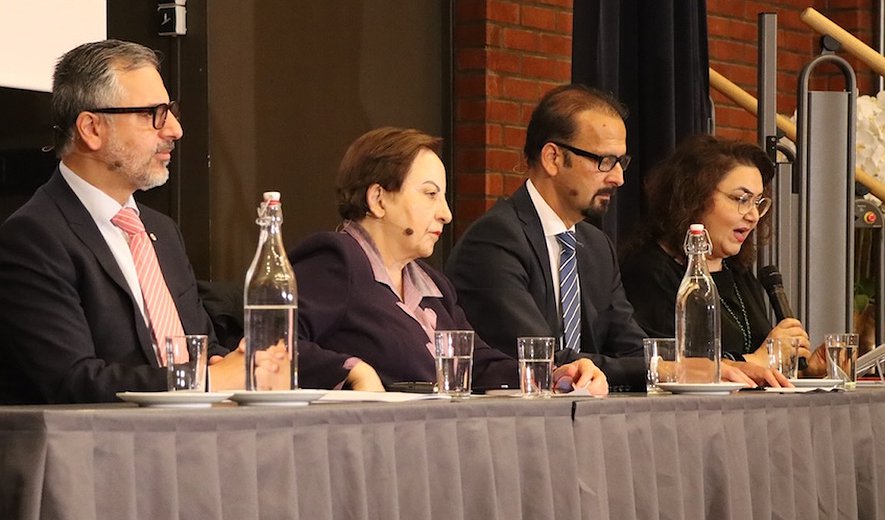
At the "Justice in Transition: Challenges and Solutions" conference in Oslo in September 2023, three prominent human-rights figures — Mahmood Amiry-Moghaddam, physician and director of Iran Human Rights; Shirin Ebadi, lawyer and Nobel peace laureate; and Payam Akhavan, international lawyer, former UN prosecutor and professor at the University of Toronto — fielded questions on how a post-Islamic Republic Iran might confront past abuses. The session was moderated by a journalist, Roya Karimi-Majd of Radio Farda.
Amiry-Moghaddam warned that the risk of reprisals is real: after the 1979 revolution, summary executions were used to entrench power. Preventing repetition, he argued, requires collective responsibility: “No dictatorship emerges without the acquiescence of much of society.” He urged public debate to separate justice from revenge and to root future laws in human rights.
Ebadi underlined that Iran’s legal framework must be rewritten according to international standards. The future order, she insisted, should be secular and democratic: no religion as the basis of the state, but all faiths free to practise.
Akhavan cautioned that not all perpetrators can be prosecuted. Truth commissions and public apologies, he argued, are as vital as trials. Transitional justice, he said, must combine accountability with social healing and cultural renewal. “Hatred is a sign of weakness,” he added, urging a democracy movement built on shared humanity.
On the death penalty, Amiry-Moghaddam noted the regime’s attempt to normalise executions. Yet opposition has grown: Iran today hosts the Middle East’s largest anti-death-penalty movement. Change in law, he said, can drive cultural change, just as the abolition of slavery preceded a shift in attitudes.
Questions turned to reparations. Ebadi stressed that prosecutions come first, but symbolic acts matter when culprits cannot be named: a school or museum in a victim’s name may offer families some solace.
On courts, Akhavan said legitimacy is key: “Special tribunals for regime leaders are technically simple, but require social will.” Ebadi argued that the judiciary must be rebuilt from scratch, though honest judges could be retained after strict vetting.
Asked when the transition begins, Amiry-Moghaddam replied: “It may already have started.” He and Akhavan alike warned of the dangers of power vacuums, citing Iraq and Libya. Above all, Akhavan insisted, transitional justice is about reclaiming shared humanity: even young militiamen, manipulated into violence, will need justice to reintegrate. But responsibility lies first with those who designed the system of repression.
The panel’s conclusion was stark: transitional justice in Iran cannot mean vengeance alone. It must also mean institutional reform, cultural change, social healing and the restoration of victims’ dignity. Only then can the country move from authoritarianism to democracy.
Translated from Farsi via machine translation and lightly edited for clarity.
More from @ihrights
IHRNGO is building a strong civil society, through empowerment of the citizens, promoting and defending the human rights.
Latest Cartoon
Latest Report