Two-Day Conference “Human Rights in Post–Islamic Republic Iran” Concludes
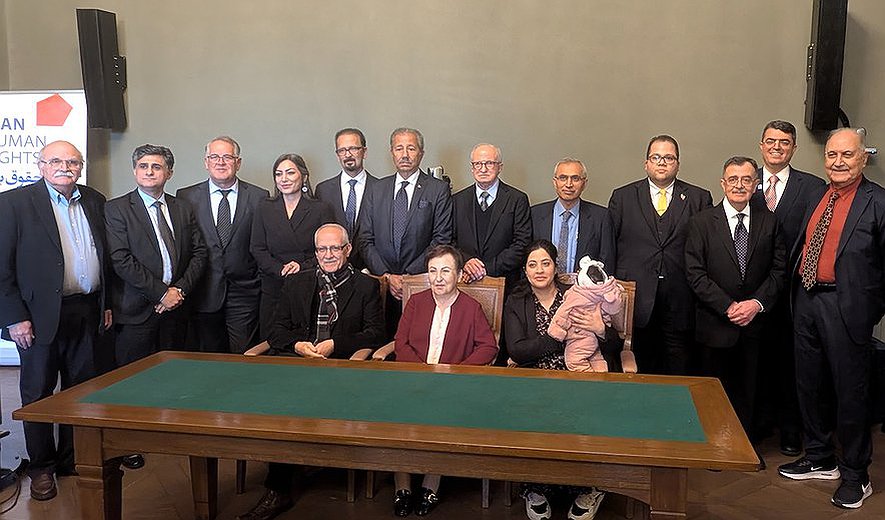
The two-day conference “Human Rights in Post–Islamic Republic Iran,” hosted by Iran Human Rights in Oslo, was held on 18–19 October 2025 with the participation of a number of public figures, political parties and groups opposed to the Islamic Republic. The conference aimed to promote dialogue on fundamental human rights in a future Iran.
The two-day conference “Human Rights in Post–Islamic Republic Iran,” hosted by Iran Human Rights in Oslo, was held on 18–19 October 2025 with the participation of a number of public figures, political parties and groups opposed to the Islamic Republic. The conference aimed to promote dialogue on fundamental human rights in a future Iran.
According to Iran Human Rights (IHRNGO), the conference concluded with the issuance of a statement condemning the recent wave of executions in Iran and expressing solidarity with the “No to Execution Tuesdays” campaign. Representatives of the participating political parties and organisations also expressed their readiness to continue discussions in order to reach consensus on minimum human rights principles for Iran after the Islamic Republic.
Mahmood Amiry-Moghaddam, director of IHRNGO, said about the closed-door discussions and the outcome of the conference: “The publication of a joint statement emphasising principled opposition to the death penalty and support for the anti-execution movement in Iran—signed by individuals with very diverse political orientations—is an important and hopeful achievement.”
He added: “The discussions among representatives of different political currents proceeded with respect, openness and without any unnecessary tension. We hope this will mark the beginning of a path toward broad consensus on human rights principles that will guarantee the dignity and rights of all citizens in a future Iran—regardless of identity, belief or political orientation.”
Amiry-Moghaddam also said in his opening speech: “Iran Human Rights is the organiser of this meeting—not as a political actor, but as an independent human rights organisation. We are not affiliated with any political current, party or group. However, we consider it our duty at this historic moment to provide a neutral space for healthy and respectful dialogue. For us, it is not important what the future political structure of Iran will be; what matters is respect for human dignity and the guarantee of human rights for all Iranian citizens.”
The first day of the conference, 18 October 2025, was held with media coverage, and all speeches and panel discussions were also broadcast live through IHRNGO’s social media platforms. Four separate panels addressed a range of issues, including justice and security during the transition period, ways to prevent violence after the Islamic Republic, equal rights in a future Iran in light of the country’s ethnic, linguistic and cultural diversity within the framework of human rights, and preventing the reproduction of authoritarianism. Each panel concluded with a question-and-answer session. IHRNGO had previously published a report outlining the themes and composition of the panels.
The second day of the conference focused on minimum human rights principles for the transition period and was held behind closed doors. Following discussions and exchanges among representatives of participating political groups and parties, the conference concluded with the signing of a statement condemning the wave of executions in Iran and expressing solidarity with the “No to Execution Tuesdays” campaign.
These discussions are expected to continue.
Many opposition groups were invited to the conference. Among them, the National Council of Resistance of Iran and the Iran Novin Party declined the invitation, and IHRNGO also did not receive a response from the office of Prince Reza Pahlavi.
The following public figures and party representatives participated in the conference:
Shirin Ebadi, jurist and Nobel Peace Prize laureate;
Foad Pashaei, Secretary-General of the Constitutionalist Party of Iran;
Abdullah Mohtadi, Secretary-General of the Komala Party of Iranian Kurdistan;
Yazdan Shahdai, member of the Secretariat and spokesperson of the Transition Management Council;
Asso Hassan Zadeh, representative of the Kurdistan Democratic Party of Iran;
Hamid Taqvaee, Leader of the Worker-communist Party of Iran;
Mahdieh Golroo, member of the executive political board of the Solidarity of Iranian Republicans;
Nasser Boladai, Secretary-General of the Balochistan People’s Party;
Homayoun Mohamnesh, member of the executive board of the National Front of Iran Organisations Abroad;
Mona Silavi, Secretary-General of the Democratic Solidarity Party of Al-Ahwaz (DSPA);
Younes Shameli, member of the executive committee of the Azerbaijan Democratic Party;
Ebrahim Alizadeh, First Secretary of Komala Kurdistan's Organization of the Communist Party of Iran;
Esmail Abdi, former Secretary-General of the Iranian Teachers’ Trade Association;
Shahin Modarres, representative of the Crisis Convergence Group.
Translated from Farsi via machine translation and lightly edited for clarity.
More from @ihrights
IHRNGO is building a strong civil society, through empowerment of the citizens, promoting and defending the human rights.
Latest Cartoon
Latest Report