Nasser Boladai: Iran’s National Government Must Belong to All Nations
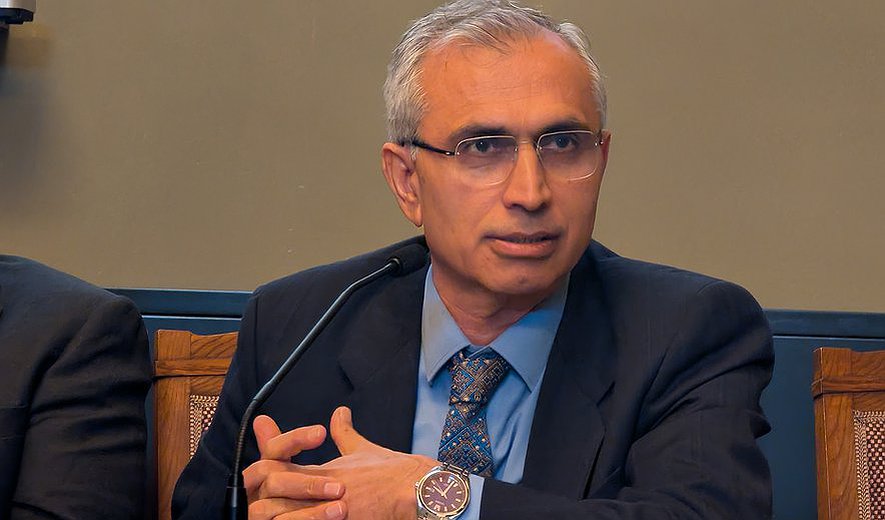
Nasser Boladai, Secretary-General of the Balochistan People’s Party, said that a future national government in Iran must represent all nations living in the country rather than a single dominant identity.
Nasser Boladai, Secretary-General of the Balochistan People’s Party, said that a future national government in Iran must represent all nations living in the country rather than a single dominant identity.
According to Iran Human Rights (IHRNGO), Boladai made the remarks at the conference “Human Rights in Post–Islamic Republic Iran,” held in Oslo on 18–19 October 2025. The conference brought together political figures and activists to discuss ways of safeguarding human rights during a future transition period in Iran.
Boladai, who described himself as a human rights activist, said that his engagement in politics stems from the same concerns that motivate his human rights work. “Our work should not be limited to counting victims,” Boladai said, “it must ensure that no human being becomes a victim in the first place. Human rights only have meaning when they prevent death and discrimination.”
Referring to the history of the Balochistan People’s Party, he said that the party has from the outset advocated popular sovereignty, liberal democracy and equal rights for all communities. A society, he argued, can achieve justice and freedom only when its political structure is democratic and liberal. Boladai referred to the experience of Nepal as an example. “Even after the collapse of the monarchy,” Boladai said, “and despite three periods of government led by the Communist Party of Nepal (Unified Marxist–Leninist), the issue of national minorities remained unresolved because none of these governments truly reflected the will of the people.”
Boladai described federalism as a potential framework for ensuring justice and participation, while warning that ethnic or linguistic federalism, if poorly designed, could lead to separation or forced migration. “The experience of countries such as Switzerland shows that multilingual and multi-ethnic systems can strengthen coexistence and equality,” Boladai said, “and in some Swiss cantons two official languages coexist, demonstrating that diversity can be a source of strength rather than a threat.” He also referred to a federalism training programme he attended at the University of Fribourg and suggested that similar models could be considered in Iran.
The Secretary-General of the Balochistan People’s Party also spoke about the situation in Iran’s Balochistan region. “In Balochistan we face deep and long-standing discrimination,” Boladai said, “and the ratio of executions to population in this region is among the highest in the world.” He argued that policies aimed at altering the demographic composition of the region were pursued during the Pahlavi period and have continued under the Islamic Republic through different mechanisms. Poverty, fuel smuggling, lack of access to land and employment, and the transfer of water from Balochistan to central regions were, he said, examples of structural discrimination.
Boladai noted that in many areas of Balochistan there are still no schools available for children and that the problem goes beyond education in one’s mother tongue. “Our first demand is access to education,” Boladai said, “and the Balochi language is part of our identity. Depriving people of education and employment amounts to a form of cultural denial.”
He also stressed the need to reform the structure of the state. “Iran’s army and state institutions should not belong solely to the Persian language or culture,” Boladai said, “and the country must be governed on the basis of equality among its nations.” He added that political science recognises different models of statehood, including multinational states, and pointed to countries such as Indonesia as examples of complex national structures.
Boladai also emphasised the importance of secularism in a future political order. “Secularism means that the state must remain neutral toward religious and cultural beliefs,” Boladai said, “and it must not grant privilege to any particular religion or culture.”
In his concluding remarks, he said that the state should not treat any language as superior to others and must support the development of minority languages alongside Persian. “Iran will become a truly free and equal society,” Boladai said, “only when the state abandons all forms of linguistic and ethnic discrimination and guarantees equal conditions of life for all its inhabitants.”
Translated from Farsi via machine translation and lightly edited for clarity.
More from @ihrights
IHRNGO is building a strong civil society, through empowerment of the citizens, promoting and defending the human rights.
Latest Cartoon
Latest Report